








The Buyer Wants Repairs After the Inspection: What Venice and Englewood Sellers Can Do

Luxury Homes By Carol Blog
Can a buyer ask you to make repairs after the home inspection in Florida, and do you have to say yes? A buyer can ask for anything. Under the standard AS IS contract used in almost every Venice and Englewood sale, you are not required to make a single repair, but saying no carries a real risk that the buyer walks during the inspection period.
You accepted an offer eleven days ago. The photos looked great, the showings went well, and you already started pricing movers. Then the inspection report lands. It is forty-eight pages long, half of it is boilerplate, and buried in the middle is a request for eighteen thousand dollars in repairs and credits.
Your first reaction is probably some version of "they knew the age of this house when they wrote the offer." That reaction is fair. It is also not a strategy. What happens over the next seventy-two hours decides whether you close in September or go back on the market with a stale listing and a known inspection report following you around.
Here is what the contract actually says, what your five real options are, and how to decide between them when you are selling in Venice, Englewood, or anywhere else along the Sarasota and Charlotte County coast.
The short answer, and why sellers panic anyway
Almost every residential resale in this market runs on the Florida Realtors and Florida Bar "AS IS" Residential Contract for Sale and Purchase. The name tells you most of what you need to know. You are selling the property in its current condition, and you are not obligated to repair anything the inspector flags.
So why does the repair request feel like a demand instead of a question? Because of the other half of that same contract. During the inspection period, the buyer can cancel for any reason at all, or for no reason, and get their entire deposit back. They just have to deliver written notice before the deadline. The Sarasota real estate attorneys at Berlin Patten Ebling lay this out clearly: the inspection period is a free look, and the default window is fifteen days when the parties do not write in a different number.
That is the whole dynamic in one sentence. You have no obligation to fix. They have no obligation to stay. Everything that happens next is negotiation, not a legal requirement.
What the AS IS contract actually says about repairs
The inspection period is a walk-away window, not a repair window
A lot of sellers read the inspection period as a stretch of time where the buyer builds a repair list and the seller has to work through it. That is not what it is. It is a window where the buyer decides whether they still want the house.
The repair request is simply the buyer telling you the price at which they would rather stay than leave. You can accept that price, counter it, or ignore it. All three are legitimate moves.
You are not required to say yes, in writing or otherwise
Nothing becomes binding unless you agree to it in writing, usually through an addendum both sides sign. Verbal agreements about who is handling the water heater are how people end up in a dispute two days before closing. Get it on paper or do not agree to it.
If you decline and the buyer cancels within the window, they get their deposit back and you go back on the market. If they cancel after the window closes, the deposit conversation changes considerably, and that is a question for a real estate attorney, not for me.
What "AS IS" does not cover: known material defects
This is the part sellers get wrong most often. Selling AS IS does not erase your disclosure duty in Florida. If you know about a defect that materially affects the value of the property and is not readily observable, you have to disclose it. That standard comes from Florida case law and it sits on top of the contract, not underneath it.
Practical translation: the inspection report may have just told you something you did not know. The moment you know it, it belongs on your Florida Seller's Property Disclosure Statement. If this buyer walks and the next one comes along, that finding goes with the house. Sellers who quietly decline a repair request and then fail to update the disclosure are creating a much bigger problem than the repair ever was.
Your five real options when the repair request arrives
1. Decline the whole thing
Sometimes this is correct. If your list price already accounted for the roof, if you had multiple offers, or if the request is a wish list of cosmetic items and normal wear, holding firm is defensible. Buyers who love the house often do not walk over a no.
The risk is obvious. You may be back on the market on Monday. Decide before you send that answer whether you are actually willing to accept that outcome.
2. Do the repairs yourself
Best for items where a licensed repair is cheap relative to the drama, and where the fix removes a lender or insurance obstacle. A double-tapped breaker, an active leak under a sink, a missing GFCI outlet. These are small dollars that can quietly kill an insurance binder.
If you go this route, use licensed and insured contractors, keep every invoice, and pull permits where the work requires one. Sarasota County and Charlotte County both maintain permit records, and unpermitted work has a way of surfacing at the worst moment. You can look up what is already on record for your parcel through the Sarasota County Property Appraiser before you decide how to handle it.
3. Offer a closing cost credit instead
This is my most common recommendation, and it usually gets accepted. You give the buyer a dollar credit at closing, they handle the work themselves after they own the house, and you never touch a contractor schedule.
The advantages are real. No coordinating trades in your last three weeks of ownership. No arguing about whether the repair was done to the buyer's standard. No warranty conversation. And the money moves at the closing table, so nothing comes out of pocket now.
One caution: the buyer's lender sets limits on how large a seller credit can be, and those limits vary by loan type. Your buyer's lender has to sign off. That is a conversation for them to have with their loan officer, not for either of us to guess at.
4. Reduce the purchase price
Cleaner than a credit in some ways, because it does not run into lender concession caps. The trade-off is that it lowers the contract price, which can affect the appraisal comparison and, more importantly, becomes the number that shows up as your sale price in the public record and in future comparable sales.
If you own another property in the same community, or your neighbors are about to list, that recorded number matters more than most sellers realize.
5. Split it
Meet in the middle, or agree to fix the two items that are genuinely safety or insurability issues and decline the rest. This is where most repair negotiations actually land, and it works because it lets both sides tell themselves they held the line.
The Venice and Englewood wrinkle: insurance is usually the real driver
Here is what makes repair requests different on this stretch of coast. In a lot of markets, the buyer is asking because they want a nicer house. Here, the buyer is very often asking because their insurance carrier is refusing to write the policy until something changes.
That distinction matters enormously in how you answer. A cosmetic request you can decline. A request tied to insurability is a request tied to the buyer's ability to close at all, and declining it may just mean you get the same request from the next buyer six weeks from now.
Roof age is the number one trigger
Florida carriers have gotten strict about roof age, and many private insurers will not write a new policy on an older roof without an inspection confirming remaining useful life. A buyer whose carrier declines the property is not being difficult. They are being underwritten.
If your roof is the sticking point, you have more leverage than you think, because the same problem is waiting for every future buyer. A roof credit negotiated once beats a roof problem discovered three times.
Four-point findings: plumbing, wiring, and panels
Most Florida carriers require a four-point inspection on older homes, covering roof, electrical, plumbing, and HVAC. A handful of findings show up over and over in homes built in the seventies through the nineties around Venice, South Venice, and Englewood 34223:
- Polybutylene supply plumbing, common in homes built roughly between 1978 and 1998, which many carriers will not insure
- Single-strand aluminum branch wiring from the sixties and seventies, which some carriers accept with approved connectors and others refuse outright
- Older electrical panel brands that underwriters treat as high risk
- Documented active leaks or water intrusion
If one of these lands in your inspection report, treat the request seriously. It is not a preference. It is a coverage problem, and it will follow the house.
Wind mitigation is your opportunity, not your threat
The wind mitigation inspection is the one document in this whole process that can work in your favor. It records roof shape, roof deck attachment, roof-to-wall connections, opening protection, and secondary water resistance. Homes with impact windows, hurricane-rated garage doors, and clipped or hip roof lines score well.
If your home has those features, get the wind mitigation report done before you list, not after the inspection. Handing a buyer a strong wind mitigation report early reframes the entire insurance conversation before it turns into a repair request. I walk sellers through this as part of prep on the selling side of my practice, and it is one of the cheapest pre-list moves available.
Storm repairs and open claims
After Helene and Milton, a large share of homes between Manasota Key and Nokomis have some repair history. That is normal here. What is not optional is documenting it.
Keep the contractor invoices, the permit numbers, the adjuster correspondence, and the before-and-after photos in one folder. When a buyer's inspector flags a repaired area, a tidy paper trail turns a scary finding into a closed chapter. Without documentation, the same repair reads as a mystery, and mysteries get priced at the high end.
If you have a claim that is still open, say so early. An open claim affects the buyer's ability to bind a new policy, and it is far better handled in week one than in week four.
Four questions to run before you answer
When a repair request comes in, resist the urge to respond the same afternoon. Run these four questions first.
One. Is this about insurability, financing, or preference? Insurability and financing items are usually worth solving. Preference items are usually worth declining. Sort the list into those three buckets before you look at the total dollar figure, because the total is designed to make you flinch.
Two. Would the next buyer find the same thing? If the answer is yes, you are not negotiating with this buyer. You are negotiating with the item itself, and you will have this conversation again in six weeks with less momentum and a longer days-on-market number.
Three. What does my market position actually look like? This is where real data beats instinct. According to the REALTOR Association of Sarasota and Manatee's July 2026 report, Sarasota County single-family inventory sat at 3.9 months of supply, down from 5.6 months a year earlier, while condos and townhomes were at 5.6 months. Roughly five to six months is considered balanced. So a single-family seller has more room to hold firm right now than a condo seller does. Know which side of that line you are on before you answer.
Four. What is my actual cost of starting over? Another month of carrying costs, taxes, insurance, and HOA dues. A relist that resets your days on market. And an inspection report that now exists in the world. Put a number on all of it. Sometimes the eighteen thousand dollar request is genuinely worse. Often it is not.
Mistakes that cost Venice and Englewood sellers money
Responding emotionally and immediately. The request is a negotiating position, not an insult. Take a day. Get contractor estimates on the two or three items that matter so you are countering with facts instead of feelings.
Agreeing to repairs verbally. If it is not in a signed addendum, it does not exist. This protects you as much as it protects the buyer.
Hiring the cheapest contractor to close it out fast. A rushed repair that fails the buyer's re-inspection costs you the repair, the delay, and your credibility in the negotiation all at once.
Ignoring the disclosure update. Anything you learned from the inspection report is now known to you. Update the disclosure.
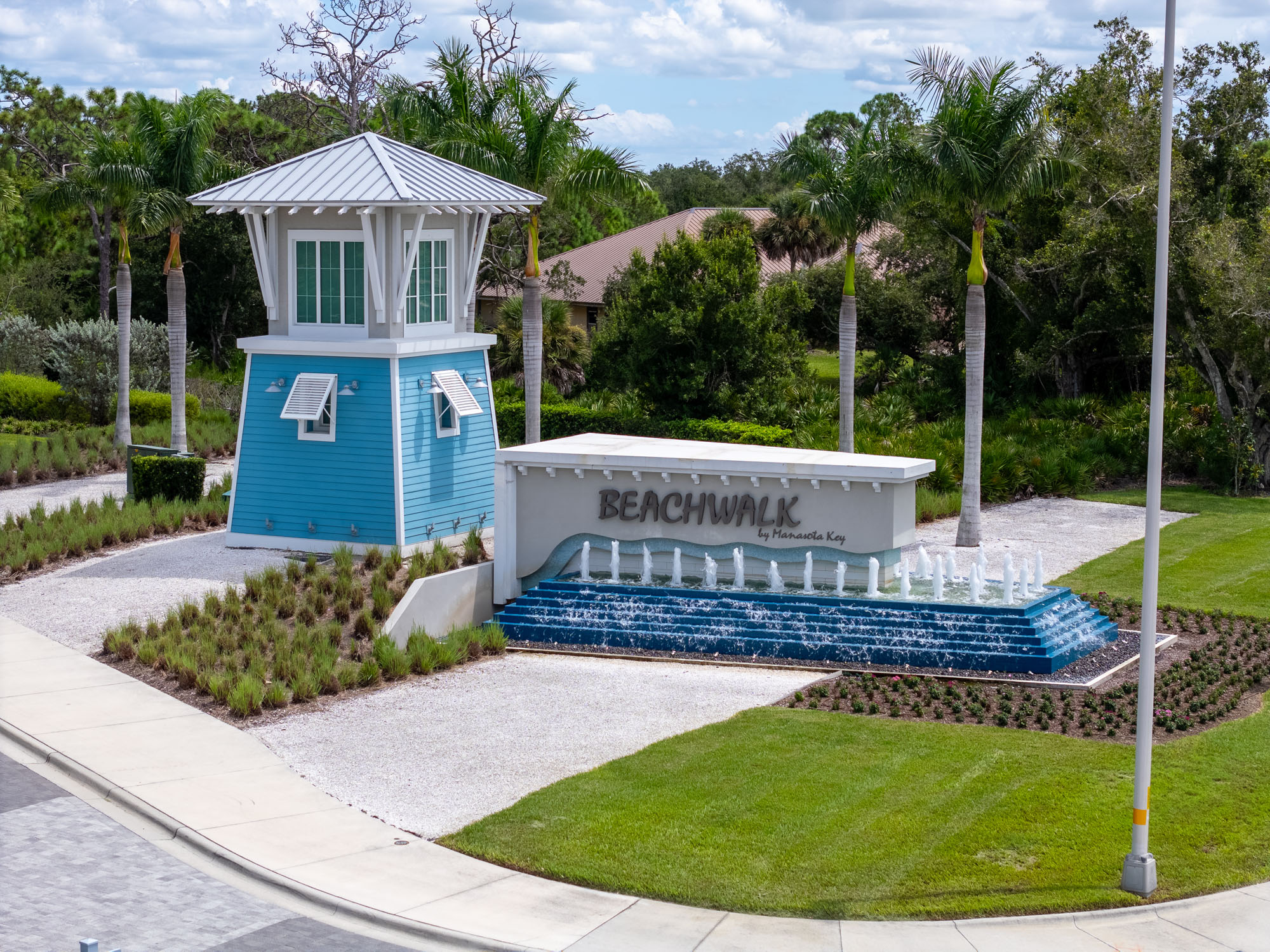
Forgetting that inventory is local, not national. Conditions in Wellen Park, Beachwalk by Manasota Key, and Venice Island are not the same as each other, let alone the same as the headlines. If you want to know what leverage you actually have, the answer lives in your own community's numbers, not in a national article. You can see the areas I track across Sarasota and Charlotte Counties on my areas served page.
A note on the paperwork itself
The AS IS contract, the repair addendum, the inspection notice, and the disclosure forms are all standardized documents published through Florida Realtors. They exist in specific versions, and the deadlines inside them are calculated in calendar days from the effective date, not business days.
That detail catches people. A fifteen day inspection period that starts on a Friday does not give you two extra weekend days at the end. Count carefully, and when a deadline is close, deliver your response in writing early.
Frequently asked questions
Do I have to make repairs if I sold my home AS IS in Florida?
No. Under the standard Florida AS IS contract, you have no obligation to make repairs or offer credits. The buyer's remedy is to cancel during the inspection period and recover their deposit, so a flat refusal can end the deal even though it does not breach the contract.
Can a buyer back out after the inspection in Venice or Englewood and keep their deposit?
Yes, if they deliver written cancellation notice before the inspection period expires. That window is fifteen days by default in the AS IS contract unless the parties wrote in something different. Once the window closes, their right to walk without consequence closes with it, and any dispute over the deposit becomes a legal question to take to an attorney.
Is a closing credit better than doing the repairs myself?
In most cases a credit is simpler for the seller. You avoid scheduling contractors, arguing over workmanship, and warranty questions, and the money moves at closing instead of out of pocket. The limit is that the buyer's lender caps how large a seller concession can be, so their loan officer has to confirm the number works.
Should I get a pre-listing inspection before I put my Venice or Englewood home on the market?
It is worth considering, especially on an older home. A pre-listing inspection, plus a wind mitigation report, lets you fix or price for the issues on your own schedule rather than under a fifteen day clock. The trade-off is that anything you learn becomes something you must disclose, so go in knowing you are trading surprise for control.
What if the repair request is really an insurance problem?
Then solving it usually helps you more than declining it, because the next buyer's carrier will raise the same issue. Roof age, older wiring, and certain plumbing types are underwriting problems attached to the house, not preferences attached to this particular buyer. Have the buyer get an insurance quote early so everyone knows what they are working with.
Let's talk before you answer that request
A repair request is not the end of your sale. It is the part of the sale where having someone in your corner who has negotiated through it before is worth the most. I have walked sellers through roof credits, four-point findings, storm repair documentation, and buyers who were bluffing, and the right answer is different every time.
If you are under contract right now and staring at an inspection report, or you are thinking about listing this fall and want to get ahead of all of this before it becomes a negotiation, reach out through the contact form on my site and let's look at it together.
Have a great day!
Carol Burdelik
Luxury Realtor • ADTV Host • Coastal Lifestyle Expert
LPT Realty, LLC | Florida License SL3549489
Serving Venice, Englewood, Wellen Park, Beachwalk by Manasota Key, Nokomis, Osprey, and the Sarasota and Charlotte County coast
Carol Burdelik is a licensed Florida real estate Sales Associate, not a CPA, attorney, insurance agent, or home inspector. Nothing in this post is tax, legal, or insurance advice. Contract language, deadlines, and coverage requirements vary by transaction and by carrier, so please consult the appropriate licensed professional about your specific situation.
Communities
Featured Articles
Trending Articles from Southwest Florida’s Top Real Estate Team
Stay updated with our most popular real estate and luxury lifestyle articles.

Client Feedback
Read what previous homeowners have said about working with us.

Let's Connect
Get in Touch
We’re here to assist you with your real estate needs.
Say Hello
Reach out to us anytime.

Office
Luxury Homes by Carol
26040 Seastone Dr.
Englewood, FL 34223

Pushing You Forward
Our Team
Meet the dedicated professionals behind your real estate journey.


@CarolBurdelik on YouTube
Latest Youtube Videos
Get the latest videos by Carol Burdelik on her YouTube channel.
Get Started
Start Your Luxury Property Journey Today
Contact Carol for a personalized consultation and discover your dream waterfront property in Florida.