










What to Do When the Appraisal Comes In Low on Your Venice or Englewood Home

Luxury Homes By Carol Blog
What happens if the appraisal comes in low when you are selling a home in Venice or Englewood, Florida? You have five real options: hold your price, split the difference, drop to the appraised value, ask the lender for a reconsideration of value, or let the buyer walk. Nothing in the contract forces you to lower your price.
You accepted an offer. You told your friends. You started packing the lanai furniture. Then the call comes in from the buyer's lender and the appraisal landed under your contract price.
It is one of the worst phone calls in a Florida transaction, and it is happening more often across Venice, Englewood, and the rest of Sarasota and Charlotte County than it did two years ago. Inventory is up. Prices have softened off their peak. Appraisers are looking backward at closed sales, and closed sales in a cooling market are not the same thing as what a motivated buyer was willing to pay you last Tuesday.
Here is the part most sellers do not know. A low appraisal is not a verdict. It is one opinion from one person on one day, and you have more leverage in that moment than almost anyone tells you. This post walks through exactly what a low appraisal means in a Florida deal, what your options are, what your contract actually says, and how to build a case for a higher number if the appraiser missed something.
What a low appraisal actually is (and what it is not)
An appraisal is a licensed appraiser's opinion of your home's market value, ordered by the buyer's lender to protect the lender. Not you. Not the buyer. The lender.
The lender will not loan more than a percentage of the appraised value. So if your contract price is $700,000 and the appraisal comes back at $675,000, the lender is underwriting to $675,000. That $25,000 difference is the gap, and it has to get resolved by someone before the deal can close.
What a low appraisal is not: proof that your home is overpriced. Appraisers rely on closed comparable sales, usually within the last few months and usually within a defined radius. In a market that has been sliding, those closed comps reflect contracts written months ago. In a neighborhood with limited recent activity, the appraiser may be reaching for comps that are not really comparable at all.
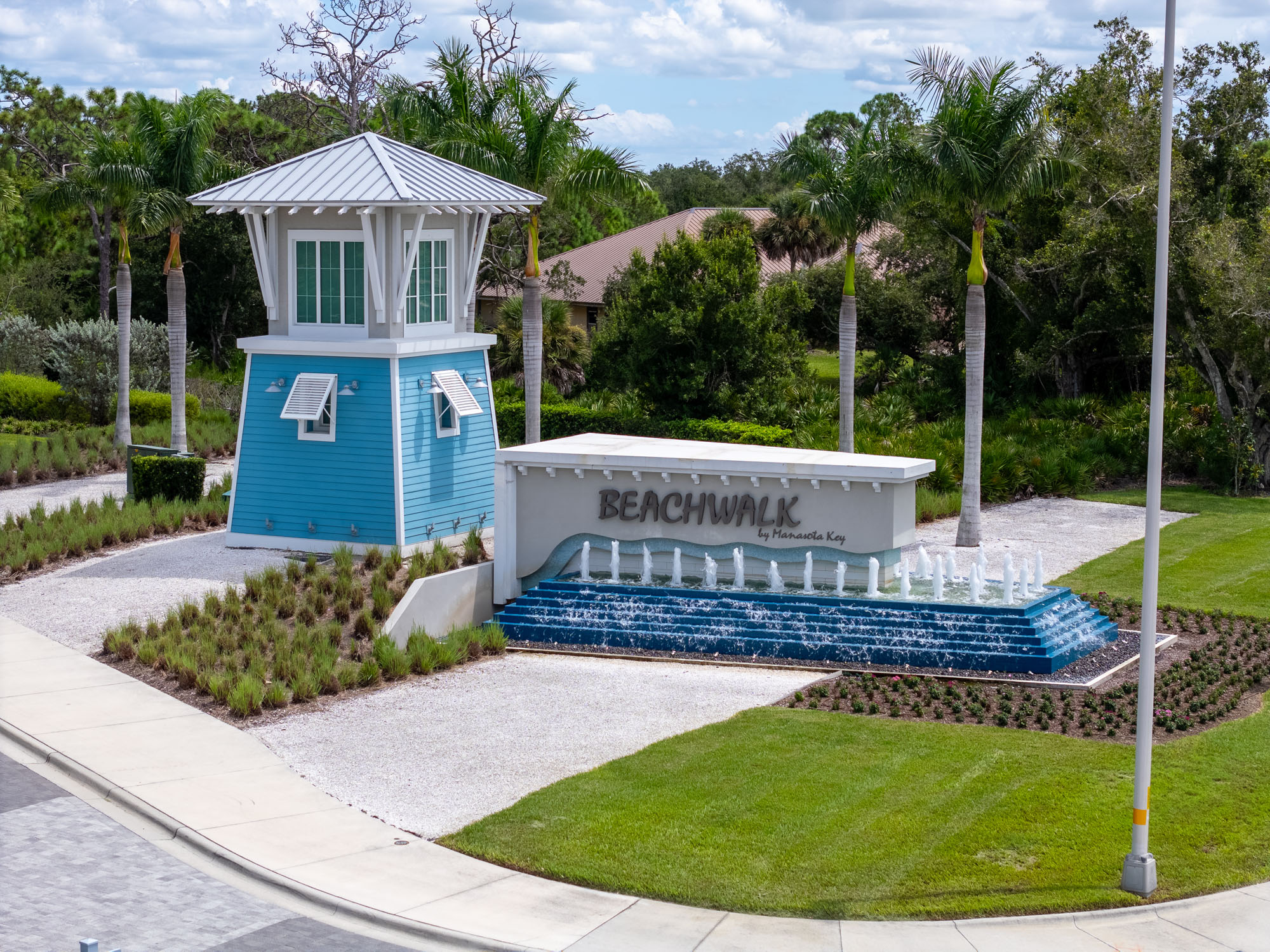
That happens constantly in Englewood 34223 and in the newer Wellen Park and Beachwalk sections, where a builder's base model and a fully optioned resale two streets over can look identical on paper and be $80,000 apart in reality.
Appraised value is not the same as your county assessed value
Sellers mix these up all the time. The number on your tax bill is not a market appraisal. The Sarasota County Property Appraiser establishes just value as of January 1 each year, then applies statutory caps that limit how much your assessed value can rise year over year. You can read how that process works on the Sarasota County Property Appraiser's appraisal process page.
A homesteaded property you have owned for fifteen years can carry an assessed value hundreds of thousands of dollars below what it would actually sell for. Neither number tells you what a lender's appraiser will say. Do not use one to argue about the other.
Why appraisals are coming in low around Venice and Englewood right now
Three things are stacking up at the same time.
Closed sales lag the market. A home that closed in June went under contract in April. When values are drifting down, every comp on the report is a slightly older, slightly higher snapshot, or a slightly older, slightly lower one depending on the month. Either way the appraiser is describing the past, and you and your buyer negotiated in the present.
Insurance and storm history are now baked into value. Post Helene and post Milton, two homes on the same street can carry very different insurability. Impact windows, a newer roof, a passed wind mitigation inspection, and elevation all move real dollars. An appraiser working from public records may not see any of it unless someone hands it to them.
New construction incentives distort the comps. When a builder in Wellen Park or Beachwalk closes a home at full list price but pays $40,000 in closing costs and buys down the rate, the recorded sale price is higher than the true net price. That can cut both ways on your appraisal, and it takes a human to explain it.
If you want to see how the broader county numbers have been trending, Florida Realtors publishes monthly market data by county and metro area. It is a useful reality check before you dig in on price.
Your five options when the appraisal comes in low
1. Hold your price and let the buyer cover the gap
Your buyer can bring the difference in cash. Using the example above, they would put an extra $25,000 on the table at closing on top of their down payment.
Some buyers can do this and will, especially if they love the house and have been outbid before. Many cannot. Ask before you assume. A buyer who is stretching to the top of their approval has nothing left to bridge with, and a buyer who sold a home up north last spring may have plenty.
This is the strongest position for you, and it costs you nothing to ask first.
2. Split the difference
The most common landing spot. You come down some, the buyer brings some cash, and everybody feels a little bruised and closes anyway.
On a $25,000 gap that might look like you reducing $12,500 and the buyer funding $12,500. It works because it signals good faith from both sides without either party absorbing the whole hit.
If you go this route, get the amended price in writing right away and make sure the lender has the revised contract. Deals lose days here for no reason.
3. Reduce to the appraised value
Sometimes this is the right answer, and it is not a defeat.
Run the actual math before you decide. What does another 30 to 60 days on market cost you in carrying costs, insurance, taxes, HOA dues, and lawn service? What is the risk that the next buyer's appraiser lands at the same number, or lower, in a softening market? What does it cost you emotionally to start over?
If your gap is small relative to those carrying costs, taking the appraised value and closing on time is frequently the better financial outcome, even though it does not feel like it in the moment.
4. Ask for a reconsideration of value
This is the option almost nobody uses and it is the one worth fighting for when the appraiser genuinely got it wrong.
A reconsideration of value, usually called an ROV, is a formal request to the lender to have the appraiser re-examine the report using additional information. Fannie Mae, Freddie Mac, and HUD adopted standardized borrower-initiated ROV requirements so that there is a real, consistent process for this. You can read Fannie Mae's overview on their Reconsideration of Value page.
The ROV request goes through the buyer and their lender, not through you. That is an important detail. As the seller you cannot call the appraiser, and you should not try. What you can do is build the packet and hand it to the buyer's agent, who hands it to the lender.
5. Let the buyer walk and go back to market
You are allowed to say no. Whether the buyer can then cancel and keep their deposit depends entirely on what is in your contract, which is the next section.
Understand the trade-off before you pick this one. Going back on market with a known low appraisal on the property is a real disadvantage. Appraisers can see prior appraisal activity, and your days on market reset with a stale feel. Choose this option because the numbers support it, not because you are angry.
What the Florida contract actually says about appraisals
This surprises a lot of sellers, so read it twice.
The standard Florida Realtors and Florida Bar residential contract, the one most of us call the FAR/BAR, does not include a standalone appraisal-to-purchase-price contingency in its base terms. A buyer who wants a clean right to cancel purely because the home did not appraise typically has to add the separate appraisal contingency rider. Plenty of contracts around here never include it.
There is also appraisal-related language inside the financing contingency, and that language has been revised over the years to narrow how long a buyer can rely on an appraisal condition to exit. Florida Realtors published a helpful breakdown in their article analyzing the financing contingency.
Three practical takeaways for you as a seller.
You are not obligated to lower your price. Nothing in the contract requires it. Negotiating is normal, but it is a negotiation, not a requirement.
You usually cannot cancel either. A low appraisal does not give the seller an exit. If the buyer proceeds and funds the gap, you are closing at the original price.
What happens to the deposit depends on the specific version, riders, and deadlines in your deal. Not on what happened to your neighbor. Pull your actual executed contract and read the financing paragraph and any riders attached. Then ask your title company or a real estate attorney what it means for your file.
How to build a reconsideration of value packet that actually works
An ROV that says "we think it is worth more" gets ignored. An ROV with evidence gets read.
Here is what belongs in the packet.
- Better comparable sales. Three to five closed sales the appraiser did not use, with an honest explanation of why each is more comparable. Same community, same builder and model where possible, similar square footage, similar lot type. A canal lot and an interior lot in the same subdivision are not the same property.
- Factual errors in the report. Wrong square footage, wrong bedroom count, wrong year built, missing garage bay, missed pool cage, wrong lot classification. These happen more than you would think and they are the easiest thing to correct.
- A dated, dollar-value list of improvements. Roof replaced and the year. Impact windows and the year. HVAC, water heater, kitchen, flooring, pool resurfacing, whole-house generator, hurricane-rated garage door. Attach permits and invoices.
- Insurance-relevant documentation. A recent wind mitigation report and four-point inspection are worth real money to a buyer in Englewood or Venice, and they support value. Include them.
- Context on the comps the appraiser did use. If a comp was a distressed sale, a family transfer, a flood-damaged home, or a builder close with heavy incentives, say so plainly and document it.
Deliver it fast and deliver it organized. The buyer's loan is on a clock, and a scattered email chain three days before the loan approval deadline helps nobody.
How to reduce your low-appraisal risk before it ever happens
The best time to deal with a low appraisal is weeks before the appraiser shows up.
Price against real closed comps, not against the aspirational active listing down the street that has been sitting for 140 days. An asking price that cannot be supported by closed sales is an appraisal problem waiting to happen, and it is one of the biggest reasons deals fall apart in this market. I go deeper on pricing strategy and pre-listing prep on my selling page.
Have your improvement documentation assembled before you list, not scrambled together the week of the appraisal. A one-page sheet with dates, costs, and permit numbers is a genuinely powerful document.
When you evaluate offers, look at more than price. A buyer bringing 40 percent down has a much smaller appraisal exposure than a buyer at 5 percent down, because the lender's loan-to-value cushion absorbs a lot of the gap. A slightly lower offer from a stronger buyer often nets you more at the closing table. If you are weighing offers across different communities, my communities pages can help you see how each neighborhood's recent activity compares.
And be present, in the paperwork sense, at the appraisal. Your agent should provide the appraiser with a comp packet and an improvement list up front. That is not pressuring the appraiser. That is giving a professional the information they need to do their job accurately.
The mistake sellers make when the appraisal comes in low
They react in the first hour.
The call comes in, the number stings, and the seller either fires off an angry refusal or panics and offers to drop the full amount before anyone has even looked at the report. Both cost money.
Here is what I would do. Ask for a copy of the appraisal report. Read it. Check the comps, the square footage, and the adjustments. Then decide. You almost always have more time than the phone call makes it feel like you do, and the sellers who slow down for 24 hours consistently do better than the ones who answer immediately.
Frequently asked questions
Can a buyer back out if the appraisal comes in low in Florida?
It depends on what is in the contract. If the buyer added the appraisal contingency rider, they generally have a right to cancel and recover their deposit when the home does not appraise and the parties cannot agree. Without that rider, the buyer's exit depends on the financing contingency language and its deadlines, which is a much narrower path. Pull your executed contract and ask your title company or a real estate attorney to walk you through your specific file.
As the seller, do I have to lower my price to the appraised value?
No. Nothing in the standard Florida contract obligates you to reduce your price because of an appraisal. You can hold firm, negotiate a split, or let the buyer decide whether to fund the gap in cash. Just weigh that against the cost of going back on market with a known appraisal on the property.
How often does a second appraisal come back higher?
There is no reliable published rate, and any agent who quotes you one is guessing. What is true is that a reconsideration of value backed by better comparable sales and documented factual corrections has a meaningfully better chance than a request with no evidence attached. The quality of the packet is what moves the number, not the request itself.
Does a cash buyer solve the appraisal problem?
Usually, yes. No lender means no lender-ordered appraisal and no loan-to-value requirement to satisfy. Cash buyers sometimes order their own appraisal or add their own appraisal contingency, so read the offer carefully rather than assuming cash automatically removes the risk.
Should I get a pre-listing appraisal before I sell in Venice or Englewood?
For most homes it is not necessary, and a strong comparative market analysis from your agent does the same job at no cost. It can be worth considering on a property that is genuinely hard to comp, like a waterfront home with unusual dock access, a heavily customized home, or a property with no recent sales nearby. That is a conversation to have before you set the price, not after.
Let's talk about your number before the appraiser does
If you are getting ready to sell in Venice, Englewood, Beachwalk by Manasota Key, Wellen Park, or anywhere in Sarasota or Charlotte County, the single best thing you can do is price it against real closed data and go in with your documentation ready. That is most of the appraisal battle, and it happens before you ever have a contract.
And if you are staring at a low appraisal right now, do not answer that call with a number yet. Let's look at the report together first.
Get in touch here and let's talk through where your home actually stands.
Have a great day!
Carol Burdelik
Luxury Realtor • ADTV Host • Coastal Lifestyle Expert
LPT Realty, LLC | Florida License SL3549489
Serving Venice, Englewood, Beachwalk by Manasota Key, Wellen Park, Nokomis, Osprey, Manasota Key, Sarasota, and the surrounding Gulf Coast
Carol Burdelik is a licensed Florida real estate Sales Associate, not a CPA, attorney, appraiser, or insurance agent. Nothing in this post is tax, legal, appraisal, or insurance advice. Contract terms, deadlines, and deposit outcomes vary by the specific version and riders in your transaction. Please consult your own qualified professionals about your situation.
Communities
Featured Articles
Trending Articles from Southwest Florida’s Top Real Estate Team
Stay updated with our most popular real estate and luxury lifestyle articles.

Client Feedback
Read what previous homeowners have said about working with us.

Let's Connect
Get in Touch
We’re here to assist you with your real estate needs.
Say Hello
Reach out to us anytime.

Office
Luxury Homes by Carol
26040 Seastone Dr.
Englewood, FL 34223

Pushing You Forward
Our Team
Meet the dedicated professionals behind your real estate journey.


@CarolBurdelik on YouTube
Latest Youtube Videos
Get the latest videos by Carol Burdelik on her YouTube channel.
Get Started
Start Your Luxury Property Journey Today
Contact Carol for a personalized consultation and discover your dream waterfront property in Florida.