




Should You Replace the Roof Before Selling Your Venice or Englewood Home?

Luxury Homes By Carol Blog
Should you replace the roof before selling your Venice or Englewood home? Not always. If your roof is under 10 years old you almost certainly leave it alone. If it is 15 or older, or worn enough to fail a four-point inspection, replacing it or pricing for it is usually the difference between a clean closing and a deal that falls apart.
Here is the question I get more than any other from sellers in Venice and Englewood right now. The roof is 17 years old. It does not leak. It looks fine from the driveway. Do you have to spend twenty thousand dollars before you list?
The honest answer is that it depends on three things: how old the roof actually is, what material it is, and whether a licensed inspector will sign off that it has five or more years of useful life left. Those three facts decide whether your buyer can get insured. And in Southwest Florida, if your buyer cannot get insured, your buyer cannot close.
That is the part most sellers miss. This is not really a roof question. It is an insurance question wearing a roof costume. Let's walk through it.
Why the roof carries so much weight in Sarasota and Charlotte County
In a lot of the country, an aging roof is a negotiating item. A buyer asks for a credit, you meet in the middle, everybody moves on.
Along the Gulf Coast it works differently. After Helene and Milton, carriers writing policies in Sarasota and Charlotte County tightened up hard on roof age. Many of them simply will not quote a home with an older covering, regardless of condition. Others will quote, but only after an inspection report comes back clean.
So when your buyer's lender says "bring me proof of insurance before we fund," the roof becomes the gate. Not the countertops. Not the lanai. The roof.
I have watched perfectly good contracts in Englewood 34223 and on Venice Island slow to a crawl in week three, not because anyone found a problem, but because the buyer could not get a carrier to bind coverage on a 19 year old shingle roof. That is a fixable problem. It is much easier to fix before you list than after you are under contract with a closing date on the calendar.
What Florida law actually says about roof age
There is a lot of bad information floating around about this, so let's be precise.
Under Florida Statute 627.7011, an insurer may not refuse to issue or renew a homeowners policy solely because of the age of the roof when that roof is less than 15 years old. That is a real protection and it matters.
Once the roof hits 15 years, the rules shift. At that point the insurer has to give you the chance to pay for an inspection by an authorized inspector before it can require a replacement as a condition of coverage. If that inspection shows five or more years of useful life remaining, the carrier cannot decline you on roof age alone.
Read that carefully, because the loophole is right there in the words "on roof age alone." A carrier can still decline for condition. It can still decline because it has stopped writing new business in your ZIP code. And it can still price the policy in a way that makes your buyer walk.
The statute protects you from one specific thing. It does not guarantee your buyer a policy.
The four-point inspection is where deals actually stall
If your home is more than 20 years old, expect a four-point inspection to enter the conversation. Citizens Property Insurance, the state-backed carrier that a lot of Gulf Coast buyers end up with, requires one on properties over 20 years old.
What a four-point covers
Four systems. Roof, electrical, plumbing supply, and HVAC. A Florida licensed inspector looks at each one and reports condition and remaining life.
Three of those four rarely blow up a deal. The roof does.
Where sellers get surprised
Two things catch Venice and Englewood sellers off guard more than anything else.
First, the age thresholds are different by material. Citizens treats soft coverings like shingle differently from hard coverings like tile, slate, clay, concrete, or metal, and the documentation requirements follow that split. A tile roof and a shingle roof of the same age are not in the same position.
Second, "no leaks" is not the standard. An inspector is judging remaining useful life, granule loss, fastener condition, flashing, and whether the covering will hold up in a wind event. A roof can be watertight today and still fail to earn a five year life letter.
Those are two very different tests, and sellers usually only find out about the second one after a buyer's inspector has already written it down.
Three roof situations, three different answers
Here is how I actually sort this with a seller at the kitchen table.
Your roof is under 10 years old
Do nothing. Pull the permit record and the original invoice, put them in a folder, and hand that folder to your listing agent on day one.
You want the age documented in the listing, in the disclosures, and ready for the buyer's insurance agent the moment a contract is signed. A documented young roof is a selling feature. Say it out loud.
If you also have a wind mitigation report from the install, that is gold. Wind mitigation credits are one of the few levers that pull a buyer's premium down, and having the report in hand removes a week of back and forth.
Your roof is 10 to 15 years old
This is the gray zone, and it is where most of my Venice and Englewood sellers land.
My recommendation here is almost always the same. Spend a few hundred dollars on a roof inspection before you list, not after. You are buying information, and the information is cheap compared to the cost of finding out in week three.
If the report comes back with solid remaining life, you now have a document that answers the buyer's insurance question before they think to ask it. That is worth far more than the inspection cost.
If the report comes back marginal, you still win, because you found out while you still have choices. You can replace it, price for it, or budget a concession. All three of those are better than a renegotiation after inspection.
Your roof is over 15 years old, or visibly worn
Now we are having a real conversation, and the answer usually comes down to your buyer pool.
If your home sits in the price band where most buyers are financing, an old roof narrows your market sharply. Financed buyers need insurance. Insurance needs a roof that passes. You are effectively marketing to cash buyers only, and cash buyers price that discount aggressively.
Replacing it before you list does three things: it opens the home back up to financed buyers, it removes the single biggest objection from every showing, and it takes the roof off the negotiating table entirely.
The counterargument is real too. You will not get dollar for dollar back. Nobody does. What you get back is buyer count and certainty, and in a market where inventory has been moving in the four month supply range across Sarasota and Manatee, buyer count is the whole game.
Running the actual math
Do not let anyone hand you a rule of thumb here. Get three written bids from licensed Florida roofing contractors before you decide anything. Quotes swing widely based on square footage, pitch, material, tear-off layers, and whether you are going shingle, metal, or tile. A tile reroof and a shingle reroof are not remotely the same number.
Once you have real bids, the comparison is straightforward. Set the replacement cost next to two other numbers.
The first is the discount cash buyers will apply if you sell as-is. In my experience that discount tends to run larger than the actual cost of the roof, because the buyer is pricing in both the work and the hassle.
The second is carrying cost. Every extra month on market has a number attached: taxes, insurance, utilities, HOA or CDD, and your mortgage if you have one. As an illustration only, a home carrying $2,800 a month in total costs that sits an extra 90 days because financed buyers keep walking has burned roughly $8,400. Your numbers will be different. Run yours.
When you set those three figures side by side, the decision usually makes itself. Sometimes it says replace. Sometimes it says price it in and move on. Either answer is fine as long as it came from your actual numbers instead of a guess.
Do not overlook the permit
This one quietly kills more deals than it should.
If a prior roof, lanai cage, water heater, or window replacement was done without a permit, or the permit was pulled and never closed out, it will surface during the transaction. Lenders, insurers, and title all want to see closed permits.
You can check your own property history through the Sarasota County permit search before you list. It takes ten minutes. If something is open, you want to be working on closing it out during your prep window, not during a 30 day financing contingency.
Florida also requires you to disclose known material defects and unpermitted work on the Seller's Property Disclosure Statement. Disclosing early is not a weakness. A buyer who learns it from you in week one negotiates very differently from a buyer who discovers it in week four.
What I would do
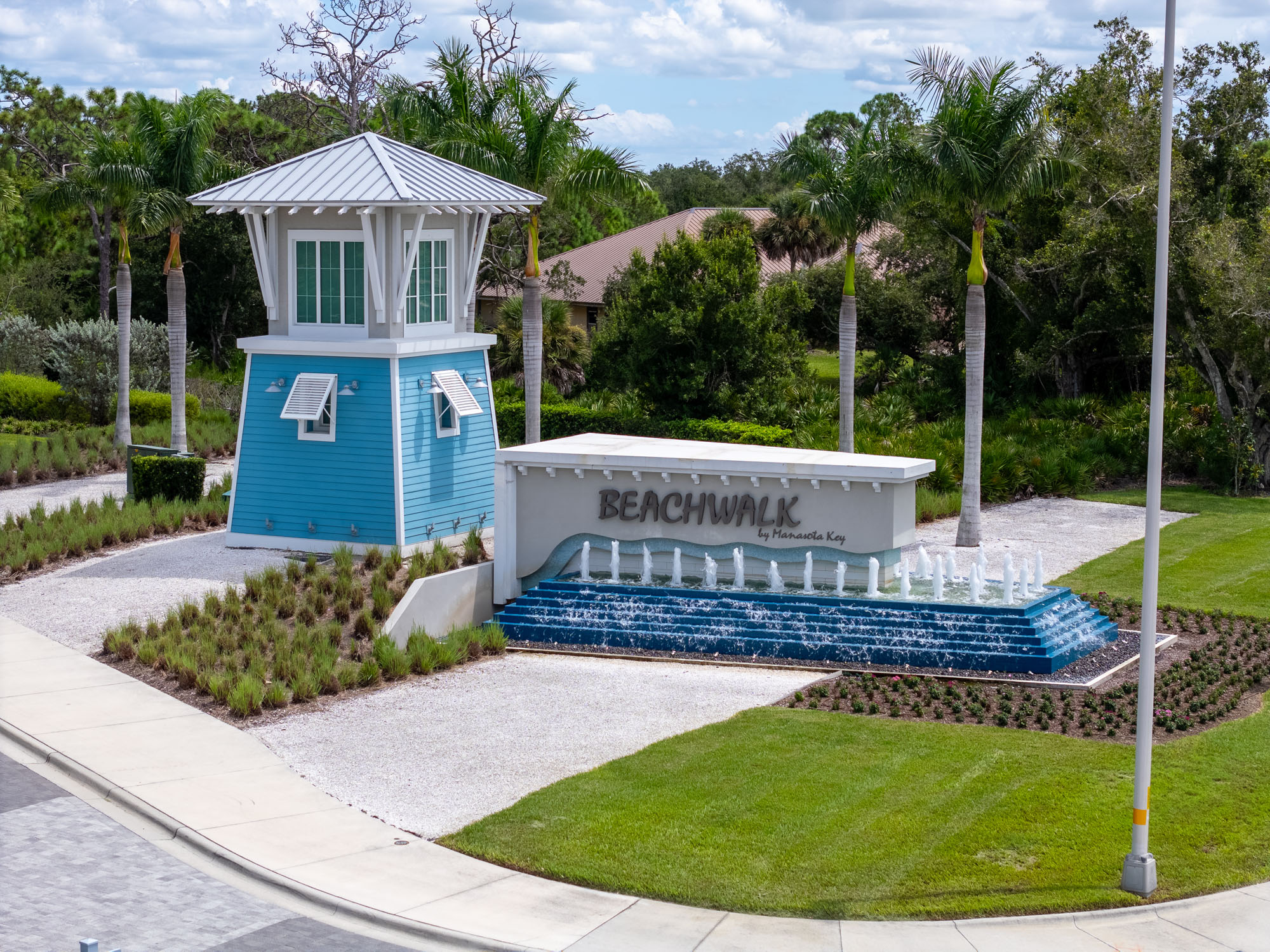
If you are thinking about listing in Venice, Englewood, Beachwalk by Manasota Key, Wellen Park, or anywhere along this stretch of the coast, here is my order of operations.
Find out the exact age and material of your roof. Not "about fifteen years." The actual permit date.
If it is 10 years or older, get a roof inspection before you list, and get a wind mitigation report while the inspector is up there. Both documents work for you.
Get three roofing bids even if you do not intend to replace it. You cannot make a pricing decision without knowing the number, and you will want that number when a buyer asks for a credit.
Then price the home with the roof factored in from day one instead of discovering it in negotiation. Sellers who plan for the roof net more than sellers who react to it. That has been true on every deal I have worked in this market.
If you want help sorting through this on your specific house, that is exactly the conversation I have on my seller consultations. We look at the roof, the insurance picture, the comparable sales, and the net sheet together before you spend a dollar.
Frequently asked questions
Can I sell a house in Florida with a 20 year old roof?
Yes. There is no law preventing you from selling a home with an old roof in Florida. The practical challenge is that many buyers will struggle to get a homeowners policy bound, which means financed buyers may not be able to close. You will likely be selling to cash buyers, and typically at a discount.
Will a new roof increase my home's sale price in Venice or Englewood?
It usually increases the number of buyers who can actually purchase your home more than it increases the price itself. A new roof removes the insurance objection and reopens the home to financed buyers. Think of it as protecting your price and your closing timeline rather than adding a premium on top.
What is the difference between a four-point inspection and a wind mitigation inspection?
A four-point inspection reports on the condition of four systems: roof, electrical, plumbing supply, and HVAC. Carriers generally require it on older homes. A wind mitigation inspection is separate and documents construction features like roof-to-wall attachments, roof shape, and impact-rated openings. The wind mitigation report is the one that can earn a buyer premium credits.
Should I offer a roof credit instead of replacing it?
Sometimes, and it depends on the buyer. A credit works well when the buyer can still get insurance and simply wants the work done on their terms. It does not solve the problem when the roof is the reason the buyer cannot get a policy at all, because no credit at closing gets a lender comfortable without proof of coverage. Talk through the specific offer before you assume a credit will hold the deal together.
How long does it take to replace a roof before listing?
Plan for the permit and scheduling, not just the labor. Between contractor availability, the Sarasota or Charlotte County permit process, and inspection sign-off, it is reasonable to build several weeks into your timeline. If you are targeting a listing date ahead of season, start the conversation early.
Thinking about selling this year?
The roof question is one piece of a bigger picture, and it is a lot easier to answer with your actual numbers in front of you. If you are considering a move in Venice, Englewood, Beachwalk by Manasota Key, Wellen Park, or anywhere in Sarasota or Charlotte County, let's look at it together before you spend money on anything.
Reach out through the contact form at luxuryhomesbycarol.com and tell me a little about your home. You can also book a time with me directly if you would rather just talk it through.
Have a great day!
Carol Burdelik
Luxury Realtor • ADTV Host • Coastal Lifestyle Expert
LPT Realty, LLC | Florida License SL3549489
Serving Venice, Englewood, Beachwalk by Manasota Key, Wellen Park, and the Sarasota and Charlotte County coast
Carol Burdelik is a licensed Florida real estate Sales Associate, not a CPA, attorney, insurance agent, or roofing contractor. Nothing in this post is tax, legal, or insurance advice. Roof condition, coverage availability, and pricing vary by property and carrier. Consult the appropriate licensed professional and get written quotes before making any decision.
Communities
Featured Articles
Trending Articles from Southwest Florida’s Top Real Estate Team
Stay updated with our most popular real estate and luxury lifestyle articles.

Client Feedback
Read what previous homeowners have said about working with us.

Let's Connect
Get in Touch
We’re here to assist you with your real estate needs.
Say Hello
Reach out to us anytime.

Office
Luxury Homes by Carol
26040 Seastone Dr.
Englewood, FL 34223

Pushing You Forward
Our Team
Meet the dedicated professionals behind your real estate journey.


@CarolBurdelik on YouTube
Latest Youtube Videos
Get the latest videos by Carol Burdelik on her YouTube channel.
Get Started
Start Your Luxury Property Journey Today
Contact Carol for a personalized consultation and discover your dream waterfront property in Florida.