






What Florida Sellers Must Disclose About Flooding in Venice and Englewood

Luxury Homes By Carol Blog
What do Florida sellers have to disclose about flooding when selling a home in Venice or Englewood? Florida law requires you to give buyers a written flood disclosure at or before the sales contract is signed, covering your property's flood zone, any flood insurance claims you filed, and any federal flood assistance you received.
If you owned a home in Venice or Englewood through Hurricane Helene and Hurricane Milton, you already know what water can do. You also know that almost every buyer coming to look at your house now asks the same question before they ask about the kitchen. Did it flood?
That question used to live in a gray area. It does not anymore. Since October 1, 2024, Florida has a specific statute telling residential sellers exactly what they owe a buyer in writing about flooding, and the 2025 update widened it further. If you are listing a home in Sarasota County or Charlotte County this season, this is the piece of the transaction most likely to come back and bite you a year after closing if you get it wrong.
Here is the good news, and I mean this. Sellers who disclose early and completely close cleaner deals than sellers who wait to be asked. The paperwork is not the enemy. Getting surprised in week three of a contract is the enemy. Let's walk through exactly what you need, where to find it, and how to handle it so it never becomes a problem.
The short version of Florida's flood disclosure law
Florida House Bill 1049 took effect October 1, 2024. It sits in Section 689.302 of the Florida Statutes, and it applies to residential real property. You can read the bill history directly on the Florida Senate's bill page for HB 1049.
The law says you must give the buyer a written flood disclosure at or before the time the sales contract is executed. Not at inspection. Not at closing. At contract.
The disclosure has to cover three things:
- Whether you have ever filed an insurance claim for flood damage to the property, with any insurer, including the National Flood Insurance Program
- Whether you have ever received federal assistance for flood damage to the property, including FEMA individual assistance or an SBA disaster loan
- A written statement that standard homeowners insurance does not cover flood damage, and that the buyer should talk to an insurance agent about buying separate flood coverage
The 2025 update broadened the first point. The disclosure now reaches known flooding that damaged the property, not only flooding you filed a claim on. That distinction matters enormously in our market. Plenty of homeowners here took on water in 2024, paid out of pocket, and never opened a claim because the deductible made it pointless. That water still gets disclosed.
What counts as flood damage under the statute
The law is more specific than most people expect. Flooding is defined as water overflowing onto normally dry land from a few different sources:
- Overflow of inland or tidal waters, which covers storm surge off the Gulf and water coming up out of a canal or the Intracoastal
- Unusual and rapid accumulation of runoff or surface water from an established source such as a river, a stream, or a drainage ditch
- Sustained periods of standing water caused by rainfall
Read that third one twice. Standing water from rain sits inside the definition. If your lanai and the back third of your lot held water for two days after a storm and it got into the house, that is inside the statute even though no canal jumped its bank.
What is not covered is a plumbing failure, a roof leak, or a slab issue. Those are still disclosable as material defects under separate law, which we will get to, but they are not flood events under this statute.
An "as is" contract does not erase your duty to disclose
This is the single most common misunderstanding I hear from sellers, and it costs people real money.
Most residential deals in our market run on an "as is" contract with a right to inspect. Sellers hear "as is" and assume it means the buyer takes whatever they find and the seller says nothing. That is not what it means.
Florida's disclosure duty comes from a 1985 Florida Supreme Court decision, Johnson v. Davis. The holding is straightforward. When a seller of a home knows facts that materially affect the value of the property, and those facts are not readily observable and are not known to the buyer, the seller has a duty to disclose them.
Courts have applied that rule to "as is" contracts repeatedly. "As is" governs who pays for repairs. It does not give you permission to stay quiet about something you know. A history of water in the house is about as material as it gets in coastal Sarasota and Charlotte County.
The practical consequence: a buyer who finds out after closing that you knew about prior flooding and did not say so can come after you. They can sue for damages. If they find out before closing, they can walk and take their deposit with them, and you have burned six weeks of market time for nothing.
The Seller's Property Disclosure Statement is a separate document
The flood disclosure is its own form. It does not replace the Florida Seller's Property Disclosure Statement, and the Seller's Property Disclosure Statement does not satisfy the flood requirement on its own.
You will typically sign both. The Seller's Property Disclosure Statement is the broad questionnaire covering roof age, prior repairs, sinkhole activity, permits, drainage, mold, and structural issues. The flood disclosure is the narrow, statute-driven one covering the three items above.
Fill out both yourself. Do not delegate the answers to your agent, and do not guess. If you do not know the answer to a question, the honest answer is that you do not know, and that is a legitimate response. What you cannot do is write "no" on something you are unsure about because "no" moves the deal faster. Speed you buy with a bad answer is speed you pay back later.
What this actually looks like in Venice and Englewood
Our market has some specifics that make this more complicated than it would be inland. If you are selling a home on the Gulf Coast, here is what to sort out before your listing goes live.
Confirm your flood zone before you list, not after
Flood maps move. FEMA updates Flood Insurance Rate Maps periodically, and Sarasota County has been through map updates that changed designations for a meaningful number of properties. The zone you bought in may not be the zone you are selling in.
Pull your current designation from two places. Start with the FEMA Flood Map Service Center, which gives you the official federal map for your parcel. Then check the county, because local staff often have detail the federal map does not capture yet. Sarasota County publishes its flood map tools and contact information on the county flood maps page. Englewood 34223 straddles the Sarasota and Charlotte County line, so confirm which county your parcel actually sits in before you go looking.
Zone X, Zone AE, and Zone VE mean very different things to a buyer's insurance quote and to a lender. Knowing yours before you list means you can answer the question in the showing instead of two weeks into a contract.
Find your elevation certificate, or get one
An elevation certificate is a FEMA form completed by a licensed surveyor that documents how high your lowest floor sits relative to the base flood elevation. In an AE or VE zone it is the document that drives a buyer's flood premium.
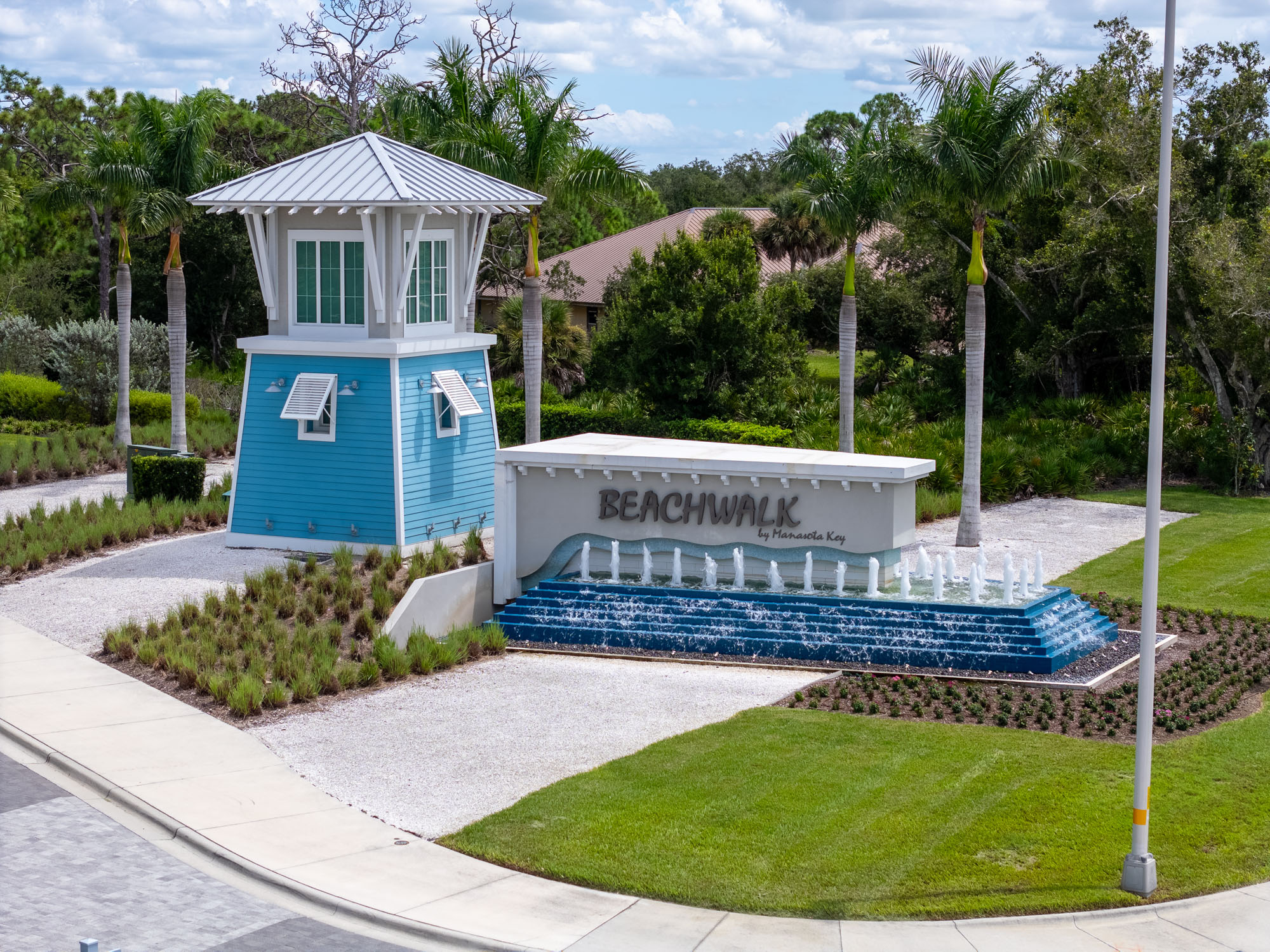
If you have one from when you bought or built, dig it out. New construction in Beachwalk by Manasota Key and the newer Wellen Park villages almost always has one in the closing file. If yours is missing, ordering a new one before you list is usually money well spent, because a buyer whose insurance quote comes in high with no certificate to check against tends to renegotiate or walk.
There is a second reason to have it. If your certificate shows your structure sits above the base flood elevation, it can support a Letter of Map Amendment to remove the property from the high-risk designation. That is a real lever on a buyer's carrying cost, and it is worth exploring well before you have a contract in hand.
Get your repair paperwork in order
If you took water and repaired it, the repair documentation is your best asset, not your liability. Pull together the permits, the contractor invoices, the remediation report, the moisture readings if you have them, and any photos from during the work.
A buyer told "yes, water came in during Helene" with nothing else offered gets nervous. A buyer told "yes, water came in during Helene, here is the permit, here is the remediation company's certificate, here is the invoice for the new drywall and the new flooring, and here is what we changed about the drainage" is looking at a house that has already been through the worst and been properly fixed. Those two conversations end very differently.
Unpermitted repair work is the one to be careful about. If a repair should have been permitted and was not, that is its own disclosure issue and its own problem at closing. Better to find out now while you still have time to resolve it.
How to build your flood history before you list
You cannot disclose what you have not gathered. Work through this list before your first showing:
- Call your current and prior insurance carriers and request your claims history for the property, in writing
- Check your records for any FEMA individual assistance or SBA disaster loan tied to the address, going back through Helene, Milton, and Ian
- Pull your flood zone from FEMA and from the county
- Locate your elevation certificate, or order one
- Collect permits and invoices for any water-related repair, including work you paid for yourself
- Write down flooding events that never became a claim, including standing water that reached the structure
- If you bought the home from someone else, look for the disclosure they gave you, since it may reveal history from before your ownership
That last one catches people. Your duty runs to what you know, and a prior owner's disclosure sitting in your closing file counts as something you know.
Why full disclosure usually protects your price
Sellers worry that disclosing water history tanks the offer. In practice the timing of the disclosure matters more than the disclosure itself.
Disclose up front and you set the frame. The buyer prices the risk before they write the offer, gets an insurance quote early, and moves forward with clear eyes. Your negotiating position holds because nothing changes after the fact.
Hold it back and the buyer finds out during inspection or from a neighbor, and now two things are true at once. They are re-evaluating the house, and they are re-evaluating you. Every remaining item in the deal gets harder. Deals that fall apart in week three come back to market with a stale days-on-market number and a story attached, and that costs more than the disclosure ever would have.
Buyers relocating to Venice and Englewood from out of state are not naive about hurricanes. They watched the coverage. What they are actually screening for is whether the seller is straight with them. Give them that and a repaired, well documented home competes just fine.
Mistakes I see sellers make
A few patterns worth avoiding:
Answering from memory. Storm seasons blur together. Pull the records instead of reconstructing the timeline in your head.
Assuming no claim means no disclosure. The 2025 update reaches known flooding regardless of whether you filed. Out of pocket repairs still get disclosed.
Treating the flood disclosure as a closing formality. It is due at or before contract execution. Handing it over at the closing table is too late.
Letting someone else fill out the forms. Your agent can explain a question. Your agent cannot answer it for you. These are your representations about your house.
Skipping the neighborhood context. If the street flooded and your house did not, say that too. Specific facts beat vague reassurance every time.
Frequently asked questions
Do I have to disclose flooding if I never filed an insurance claim?
Yes. The 2025 expansion of Florida's flood disclosure law reaches known flooding that damaged the property, not just flooding you filed a claim on. If water got into your home during Helene, Milton, or Ian and you paid for the repair yourself, that still gets disclosed. Separately, Johnson v. Davis already required disclosure of known material facts that a buyer could not readily observe.
Does selling "as is" mean I do not have to disclose past flood damage?
No. An "as is" clause addresses who pays for repairs, not what you have to tell the buyer. Florida courts have consistently held that the duty to disclose known material defects survives an "as is" contract. A buyer who discovers undisclosed flood history after closing can pursue you for damages.
When exactly do I have to give the buyer the flood disclosure?
At or before the time the sales contract is signed. That is earlier than most sellers expect, and it is earlier than the inspection period. Practically speaking, have the disclosure prepared before you list so it is ready the moment an offer comes in and never becomes the thing holding up a signature.
How do I find out what flood zone my Venice or Englewood home is in?
Start with the FEMA Flood Map Service Center for the official federal designation, then confirm with the county, since local staff sometimes have detail the federal map has not picked up yet. Sarasota County publishes flood map tools on its public works site. If your property is in Englewood 34223, verify whether it falls in Sarasota or Charlotte County first, because that determines who you call.
Will disclosing flood history hurt my sale price?
Usually less than you fear, and far less than a late discovery would. Buyers who learn about it up front price the risk into their offer and move forward. Buyers who learn about it during inspection tend to renegotiate everything or walk. Complete repair documentation is what separates those two outcomes.
Thinking about listing this season?
If you are weighing a sale in Venice, Englewood, Beachwalk by Manasota Key, Wellen Park, or anywhere else across the Gulf Coast areas I serve, let's get your disclosure file built before your first showing rather than during your first contract. It takes an afternoon, and it is the cheapest insurance in the whole transaction.
I will walk your property with you, help you figure out what documentation you are missing, and tell you honestly how your flood story is likely to land with the buyers actively shopping our market right now. No pressure, no obligation.
Get in touch here and let's talk it through.
Have a great day!
Carol Burdelik
Luxury Realtor • ADTV Host • Coastal Lifestyle Expert
LPT Realty, LLC | Florida License SL3549489
Serving Venice, Englewood, Beachwalk by Manasota Key, Wellen Park, Nokomis, Osprey, Manasota Key, Sarasota, and the surrounding Gulf Coast
Carol Burdelik is a licensed Florida Sales Associate, not a CPA, attorney, or insurance agent. Nothing in this post is tax, legal, or insurance advice. Florida disclosure requirements change, and how they apply to your property depends on your specific facts. Please consult a licensed Florida real estate attorney about your disclosure obligations and a licensed insurance agent about flood coverage before you list or sign a contract.
Communities
Featured Articles
Trending Articles from Southwest Florida’s Top Real Estate Team
Stay updated with our most popular real estate and luxury lifestyle articles.

Client Feedback
Read what previous homeowners have said about working with us.

Let's Connect
Get in Touch
We’re here to assist you with your real estate needs.
Say Hello
Reach out to us anytime.

Office
Luxury Homes by Carol
26040 Seastone Dr.
Englewood, FL 34223

Pushing You Forward
Our Team
Meet the dedicated professionals behind your real estate journey.


@CarolBurdelik on YouTube
Latest Youtube Videos
Get the latest videos by Carol Burdelik on her YouTube channel.
Get Started
Start Your Luxury Property Journey Today
Contact Carol for a personalized consultation and discover your dream waterfront property in Florida.