





FIRPTA and Selling Your Venice or Englewood Home as a Foreign Owner

Luxury Homes By Carol Blog
How does FIRPTA work when you sell a Venice or Englewood home as a foreign owner? If you are a foreign person for U.S. tax purposes, the buyer must withhold up to 15% of the gross sale price at closing and send it to the IRS. You get the excess back later by filing a U.S. tax return.
You sold the house. You signed at the title company. And then you look at the settlement statement and a large number is sitting in a line item that has nothing to do with your mortgage payoff, your commission, or your prorated taxes.
That line is FIRPTA withholding. On a $600,000 sale, 15% is $90,000. It leaves the closing table and goes to the IRS, even if your actual tax on the sale turns out to be a fraction of that, and even if you sold at a loss.
This catches more sellers in Venice and Englewood than you would guess. Canadian owners on Manasota Key. Seasonal owners in Wellen Park who spend four months a year here. Families who bought a condo in South Venice in 2021 and never became U.S. residents. If that sounds like you, read this before you list, not after you go under contract. The single biggest factor in how much cash you walk away with on closing day is how early you start.
What FIRPTA actually is
FIRPTA stands for the Foreign Investment in Real Property Tax Act. It is a collection mechanism, not a separate tax. Congress wanted a way to make sure foreign sellers paid U.S. tax on gains from U.S. real estate, so it made the buyer responsible for holding money back at closing.
Read that again, because it surprises people. The law puts the legal obligation on the buyer, not on you. The buyer, or more practically the closing agent handling the file, must withhold the required amount from your proceeds and remit it to the IRS. If they fail to withhold when they were supposed to, the IRS can pursue the buyer personally for the money.
That is why your buyer's side will not be flexible about this. It is not a negotiating position. It is their exposure. You can read the IRS overview of the rules on the IRS FIRPTA withholding page, and the Florida Realtors association keeps a plain-language summary in its legal library.
Who counts as a foreign person, and who does not
This is where most confusion starts. Owning a Florida home does not make you a U.S. taxpayer, and spending winters here does not automatically make you a resident.
Broadly, a foreign person for FIRPTA purposes includes a nonresident alien individual, a foreign corporation, a foreign partnership, and certain foreign trusts and estates. A U.S. citizen or a green card holder is not a foreign person. Someone who meets the substantial presence test based on days spent in the country may be treated as a U.S. resident for tax purposes even without a green card.
That last one matters here. Seasonal owners who stay five or six months a year sometimes cross the threshold and sometimes do not, depending on how the day count works across three years and whether a closer connection exception or a treaty position applies. This is squarely a question for a cross-border accountant, and it is worth the consult fee. Getting the classification right before you list determines whether you plan around withholding at all.
Two other situations come up often in the Englewood 34223 market. If a property is held in a foreign corporation or a foreign trust, the analysis changes. If a husband and wife hold title together and only one spouse is a foreign person, the withholding generally applies to that spouse's share of the proceeds rather than the whole sale. Bring the deed and the ownership structure to that first conversation.
How much gets withheld: the three tiers
The amount is based on the gross sale price. Not your gain. Not your net proceeds after paying off the mortgage. The full contract price.
15% is the standard rate
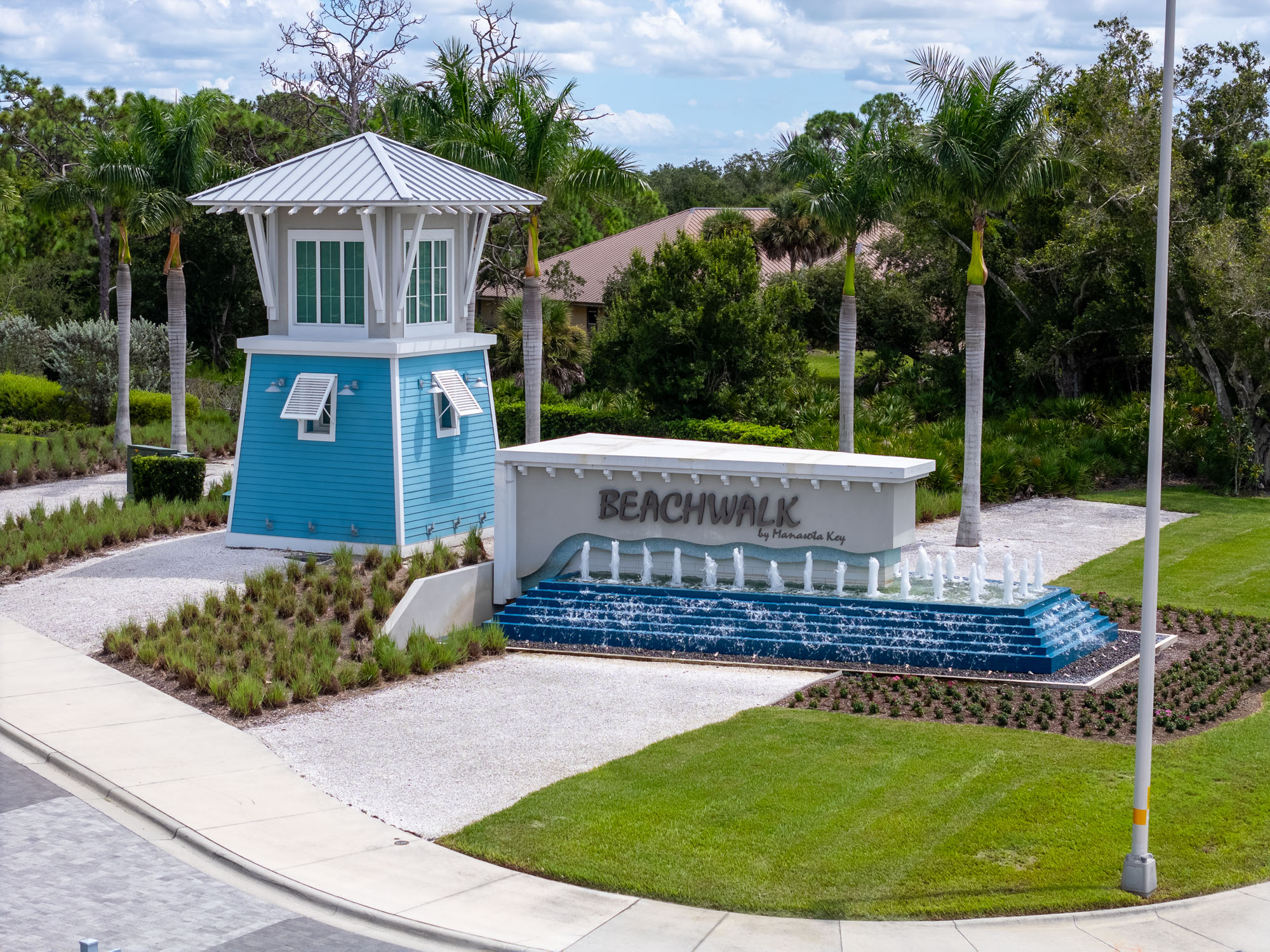
Absent an exception, the withholding is 15% of the gross amount realized. On a $750,000 sale in Beachwalk by Manasota Key, that is $112,500 leaving closing and going to the IRS.
10% when the buyer will live there and the price is between $300,001 and $1,000,000
If the sale price falls in that band and the buyer, or a member of the buyer's family, signs a certificate stating they will use the property as a residence for at least 50% of the days it is used in each of the first two twelve-month periods after closing, the rate drops to 10%.
This one is worth paying attention to, because a large share of homes in Venice and Englewood trade in exactly that price band. A buyer who is moving in full time may be perfectly willing to sign. A buyer purchasing a rental or a pure investment property cannot.
0% when the price is $300,000 or less and the buyer will live there
Same residence certificate, lower price ceiling, and the withholding requirement goes away entirely. Under $300,000 is a narrow slice of the current Venice and Englewood market, but it does turn up in older condo inventory and smaller South Venice properties.
Notice what all three tiers have in common. Two of them depend entirely on what the buyer intends to do with the house, and that is information you only learn by asking. It belongs in the conversation when offers come in, not after the contract is signed.
Why the withholding is usually bigger than your actual tax bill
Here is the part that stings. Withholding is calculated on the sale price. Your tax is calculated on your gain. Those are two very different numbers.
Take an illustration. Say you bought a Venice home for $520,000, put $60,000 into impact windows and a new roof, and sold for $600,000 with roughly $40,000 in selling costs. Your gain in that illustration is negative. You lost money. But FIRPTA withholding at 15% of $600,000 is still $90,000, and it still comes out at closing unless you have taken steps in advance.
You are not losing that money permanently. You claim it back by filing a U.S. nonresident tax return reporting the sale, and the IRS refunds the difference between what was withheld and what you actually owe. The problem is time. Refunds on these returns commonly take six months or longer, and you cannot file until the tax year is over. Sell in February and you may be waiting well over a year to see that cash again.
For a seller who is rolling proceeds into another purchase, that delay is the whole ballgame. It is the difference between buying your next place in the spring and waiting until the following season.
The withholding certificate: your best tool, and it has a deadline
There is a way to reduce or eliminate the withholding at closing rather than waiting on a refund. It is called a withholding certificate, and you apply for it using IRS Form 8288-B.
The application asks the IRS to look at the real numbers, your purchase price, your improvements, your selling costs, your actual expected tax, and approve withholding at an amount closer to what you will genuinely owe. In the illustration above, an approved certificate could reduce the $90,000 to something far smaller, or to nothing.
The mechanics matter. If the application is filed with the IRS on or before the day of closing and is still pending when you close, the closing agent still holds the full statutory amount. They just do not send it to the IRS yet. Once the IRS mails its decision, the agent has 20 days to remit whatever amount the IRS determined. If the certificate reduces the number, the balance comes back to you without a tax return.
The catch is processing time. Form 8288-B is still a paper program, and the IRS Taxpayer Advocate has flagged the backlog in its own reporting. Applications routinely take months. This is precisely why the timing of your first conversation drives the outcome. A seller who starts the paperwork when the listing goes live has a real chance. A seller who learns about FIRPTA a week before closing does not.
What you need in place before you list
Preparation here is mostly documentation, and none of it is difficult if you start early.
- A U.S. taxpayer identification number. Most foreign sellers need an ITIN to apply for a withholding certificate and to file the return that gets the refund. If you do not have one, applying takes time of its own.
- Your original closing documents. The settlement statement from when you bought the property establishes your cost basis. Dig it out now.
- Receipts for capital improvements. The new roof, the impact windows, the lanai cage, the kitchen remodel. These raise your basis and lower your gain, which lowers the tax and strengthens the certificate application. Post-hurricane repairs and upgrades across Englewood and Manasota Key have been substantial, and sellers often have thousands of dollars of improvements they never documented.
- Clarity on how title is held. Individual, joint, trust, or entity. Each has different handling.
- A cross-border tax professional engaged early. Not a general preparer. Someone who handles nonresident U.S. real estate sales routinely. I am happy to share several names so you can interview more than one, but the choice is always yours.
Notice that four of those five items are things you control entirely, and all four are easier to handle in the quiet weeks before you list than in the compressed days before closing.
How the timeline actually runs
A realistic sequence for a foreign seller in Venice or Englewood looks something like this.
Before listing, you confirm your tax status, gather your basis documents, and get your ITIN sorted if you need one. Once you have a signed contract, your tax professional prepares and files the Form 8288-B application, and the closing agent is told from day one that a foreign seller is on the file.
At closing, the agent withholds the statutory amount. If the certificate application is pending, those funds sit rather than going to the IRS. Within 20 days of closing, or 20 days after the IRS mails its certificate decision, Forms 8288 and 8288-A go in with whatever payment is due.
After the tax year closes, you file a nonresident return reporting the sale, and any over-withheld amount comes back as a refund. The IRS explains the reporting obligations on its page on reporting and paying tax on U.S. real property interests.
Every step above has a dependency on the step before it. That is the whole reason early planning pays.
Five mistakes that cost foreign sellers real money here
Waiting until the contract is signed to mention it. By then the certificate timeline is already compromised. Tell your agent and your closing agent at the listing appointment.
Assuming a loss means no withholding. It does not. Withholding tracks the price, not the profit.
Never asking the buyer about occupancy. The 10% tier is real money and it hinges on a question nobody asks unless someone raises it during negotiation.
Throwing away improvement receipts. Every documented dollar of capital improvement reduces the gain you will be taxed on. Sellers who rebuilt after 2024 often have the largest undocumented basis of anyone.
Budgeting the net proceeds as if withholding will not happen. If you are counting on that cash for a down payment on your next property, build the timeline around when the money actually comes back, not when you close.
Why this comes up so often in Venice and Englewood
Southwest Florida has a deep base of foreign ownership, and Canada sits at the top of it. In the National Association of Realtors research on international transactions in U.S. residential real estate, foreign buyers purchased 67,100 existing U.S. homes worth $45.3 billion between April 2025 and March 2026. Florida took the largest share of any state at 20% of foreign buyers, and Canada led all countries at 16% of international transactions.
Those purchases eventually become sales. A Canadian couple who bought in Englewood in 2019 and is now ready to simplify. An owner on Manasota Key deciding after two storm seasons that the maintenance is more than they want. A seasonal owner in Wellen Park whose plans changed.
Every one of those sales runs through FIRPTA, and every one of them goes better with lead time. If you want the broader picture of what a Florida sale involves from listing through closing, my selling page walks through the process, and you can see the full areas I serve across Sarasota and Charlotte counties.
Frequently asked questions
Does FIRPTA apply if I am a Canadian citizen who spends winters in Florida?
It depends on your U.S. tax residency status, not your citizenship or your property ownership. Many seasonal owners are nonresident aliens and are subject to FIRPTA, but the substantial presence test can change that answer based on how many days you spend in the country across a three-year period. Confirm your status with a cross-border accountant before you list, because the answer changes your entire closing plan.
Can I avoid FIRPTA withholding by selling to a buyer who will live in the home?
You can reduce it, and in a narrow case eliminate it. If the price is $300,001 to $1,000,000 and the buyer signs a certificate committing to use the property as a residence under the IRS rules, the rate drops from 15% to 10%. If the price is $300,000 or less with that same certificate, withholding goes to zero. The buyer has to be willing to sign, so ask about occupancy while you are still negotiating.
How long does it take to get the over-withheld money back?
Through the refund route, plan on a long wait. You file a nonresident return after the tax year ends, and refunds on these returns commonly take six months or more after filing. That is why the withholding certificate route matters so much. An approved Form 8288-B can reduce the amount held at closing instead of making you wait for a refund.
Who is responsible if the withholding is handled incorrectly?
The legal obligation sits with the buyer as the transferee, which is why buyers and their closing agents take it seriously. In practice the closing agent administers the withholding and the filings. Your responsibility as the seller is to disclose your status early, provide accurate documentation, and file the return that reconciles what was withheld against what you actually owe.
Thinking about selling and not sure where you stand?
If you own a home in Venice, Englewood, Wellen Park, or on Manasota Key and you are not a U.S. citizen or green card holder, the best thing you can do is start the conversation months before you plan to list. I coordinate with your accountant and the closing agent so the paperwork is moving while the house is still on the market, not scrambling in the last week.
Come tell me about your property and your timeline at luxuryhomesbycarol.com/contact and we will map out what your closing should look like.
Have a great day!
Carol Burdelik
Luxury Realtor • ADTV Host • Coastal Lifestyle Expert
LPT Realty, LLC • License SL3549489
Serving Venice, Englewood, Wellen Park, Beachwalk by Manasota Key, and the Sarasota and Charlotte county coast
Carol Burdelik is a licensed Florida Sales Associate, not a CPA, attorney, or insurance agent. Nothing in this post is tax, legal, or insurance advice. FIRPTA outcomes depend on your individual circumstances, and you should consult a qualified cross-border tax professional about your situation.
Communities
Featured Articles
Trending Articles from Southwest Florida’s Top Real Estate Team
Stay updated with our most popular real estate and luxury lifestyle articles.

Client Feedback
Read what previous homeowners have said about working with us.

Let's Connect
Get in Touch
We’re here to assist you with your real estate needs.
Say Hello
Reach out to us anytime.

Office
Luxury Homes by Carol
26040 Seastone Dr.
Englewood, FL 34223

Pushing You Forward
Our Team
Meet the dedicated professionals behind your real estate journey.


@CarolBurdelik on YouTube
Latest Youtube Videos
Get the latest videos by Carol Burdelik on her YouTube channel.
Get Started
Start Your Luxury Property Journey Today
Contact Carol for a personalized consultation and discover your dream waterfront property in Florida.