




Buyer Closing Costs in Venice and Englewood, FL: What You Will Actually Pay

Luxury Homes By Carol Blog
What closing costs does a buyer pay in Venice or Englewood, Florida? You pay the lender, title and recording charges plus prepaid insurance and taxes. The seller customarily pays the doc stamps on the deed. Your Loan Estimate and Closing Disclosure show your exact cash to close.
Most buyers I work with know their down payment to the dollar. Ask them what they will actually wire to the title company the week of closing, though, and the answer gets fuzzy fast. That gap is where stress lives. It is also where a surprisingly large number of relocation buyers get caught short.
Florida closings have their own vocabulary. Doc stamps. Intangible tax. Prorations. Escrow reserves. None of it is hard once someone walks you through it, but nobody sends you that walkthrough until you are already under contract and the clock is running.
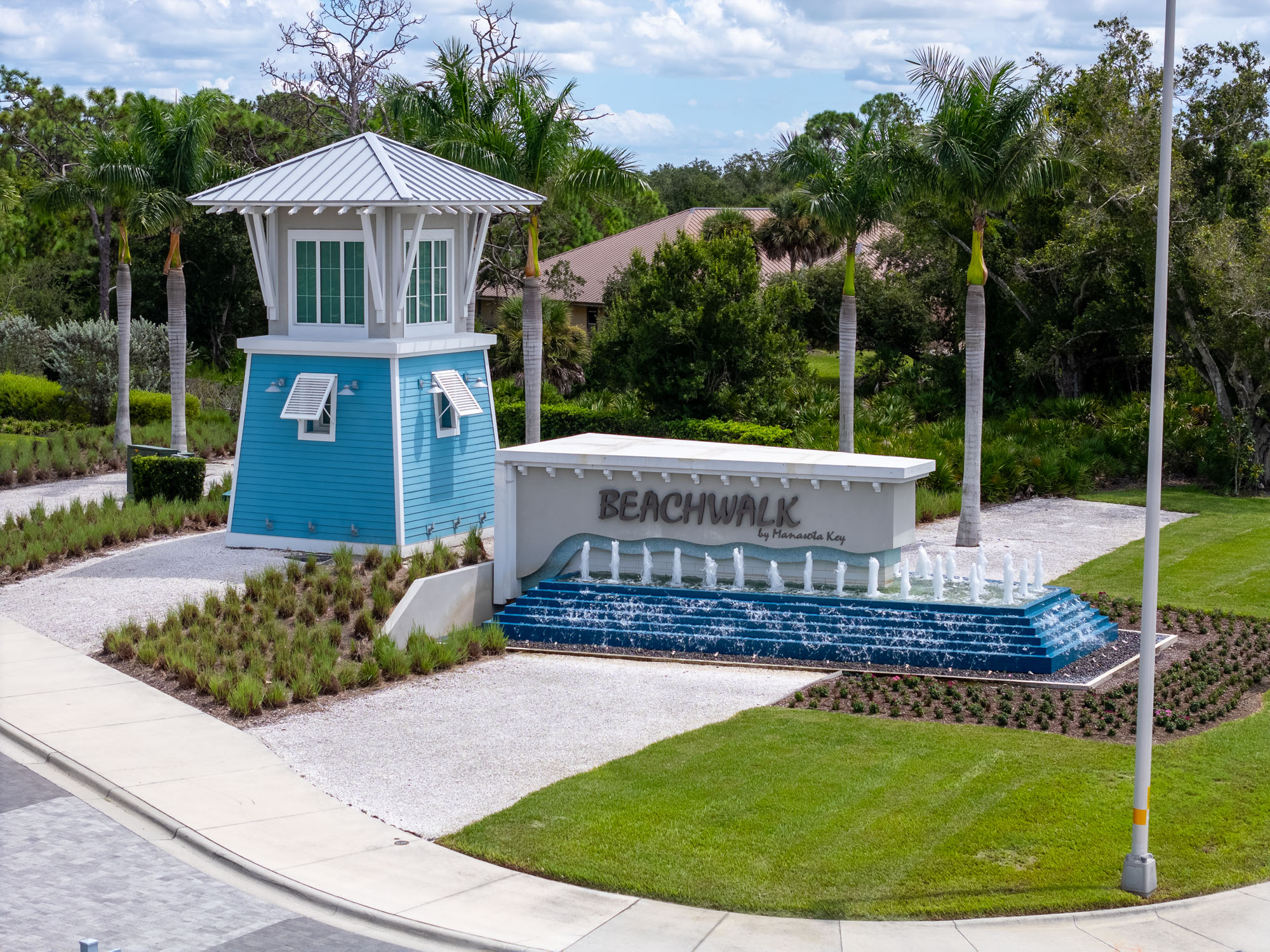
So let's do it now. Here is what you will pay as a buyer in Venice, Englewood 34223, Wellen Park and Beachwalk by Manasota Key, what the seller usually covers, what changes if you pay cash, and why closing in November or December carries a couple of timing wrinkles you will want to plan for.
Cash to close vs. closing costs: two different numbers
Start with the most important distinction. Closing costs are the fees and taxes it takes to complete the purchase. Cash to close is the total amount you bring to the table.
Cash to close includes your down payment, your closing costs, and your prepaid items. Then it subtracts your escrow deposit, any seller credits, and any lender credits. That final number is the one you actually wire.
Here's what I'd do. Stop thinking about closing costs as one lump. Break them into four buckets: lender charges, title and settlement charges, government taxes and recording fees, and prepaids. Once you see the buckets, the whole thing gets a lot less mysterious.
Bucket 1: Lender charges (financed buyers only)
If you are getting a mortgage, your lender will charge for the work of making the loan. These show up on your Loan Estimate, which the lender has to give you within three business days of your application.
Typical lender line items include an origination or underwriting fee, the appraisal, a credit report, a flood zone certification, and any discount points you choose to buy. Points are optional. They are a trade of cash today for a lower rate over the life of the loan.
The appraisal fee is often paid up front when the appraisal is ordered, so it may never appear in your final wire. Same with some application fees. Keep a running list of what you have already paid outside of closing so you are not double counting.
Every lender prices these differently, and I never quote rates or fees in a blog post. What I tell every buyer is simple: get Loan Estimates from more than one lender and compare them line by line. The form is standardized for exactly that reason. If you want a starting point on how financing works in our market, my financing overview lays out the steps.
Bucket 2: Title and settlement charges
Florida closings run through a title company, sometimes an attorney. The title side of your costs covers the title search, the settlement or closing fee, and title insurance.
Lender's title policy
If you are financing, your lender will require a lender's title insurance policy. That cost is customarily the buyer's. It protects the lender's interest in the property, not yours, which surprises a lot of people.
Owner's title policy
The owner's policy protects you. Who pays for it is a matter of local custom and contract, and custom is not uniform across Southwest Florida. It can differ between Sarasota County, Charlotte County and Manatee County, and it is negotiable either way.
On the standard Florida Realtors and Florida Bar contract, the paragraph that decides who pays for the owner's policy and who chooses the title company is filled in when you write the offer. Read it before you sign. It is one of the few closing cost items you can move with a checkbox.
One useful fact: Florida title insurance premiums are promulgated, meaning the state sets the premium rate. The premium itself is the same at every title company. What varies is the settlement fee, search fees, and endorsements around it. When you are comparing, compare those.
Endorsements and the settlement fee
Lenders often require endorsements to the title policy, such as coverage related to an HOA or a survey. Each carries a charge. You will also typically pay a settlement fee to the title company for running the closing, handling the funds, and recording your documents.
Bucket 3: Florida taxes and recording fees
This is the bucket that catches out-of-state buyers off guard, because many states do not have it, or they split it differently.
Documentary stamp tax on the deed (usually the seller)
Florida charges documentary stamp tax when a deed is recorded. The rate is $0.70 per $100 of the sale price. In most Southwest Florida transactions, including Venice and Englewood, the seller customarily pays the deed stamps. The Florida Department of Revenue's documentary stamp tax page lays out the rates.
Doc stamps on your mortgage note (the buyer)
If you finance, the promissory note gets its own documentary stamp tax at $0.35 per $100 of the loan amount. That one is yours.
Nonrecurring intangible tax (the buyer)
Florida also charges a one-time intangible tax on a new mortgage, at 2 mills, which is $0.002 per dollar of the loan amount. Also yours.
What that math looks like
Let's use a simple illustration. Say you buy a $685,000 home in Englewood with 20% down, so your loan is $548,000. These two taxes are pure arithmetic, so we can work them out:
- Doc stamps on the note: $548,000 ÷ 100 × $0.35 = $1,918
- Intangible tax: $548,000 × 0.002 = $1,096
- Together: $3,014, on top of your other closing costs
If you pay cash, both of those go to zero, because there is no note and no mortgage. That is one of the quiet advantages of a cash purchase in Florida.
Recording fees
The county clerk charges to record your deed and your mortgage. These are set by the county and are modest compared to everything else, but they are real and they land on your side of the statement.
Bucket 4: Prepaids and escrow reserves
Prepaids are not fees. They are your own future bills, paid early. They still come out of your wire, and in Southwest Florida they can be the biggest surprise on the whole statement.
Homeowners insurance and flood insurance
Most lenders want your first full year of homeowners insurance paid at or before closing. If the home is in a flood zone that requires it, or if you choose to carry it, flood insurance works the same way.
On the Gulf Coast, the insurance line can move your cash to close more than any other single item. That is why I push buyers to get quotes during the inspection period, not after it. I will not quote a premium here, because it depends on the roof, the windows, the elevation and the carrier. Get real quotes on the actual house before you are locked in.
Escrow reserves
If your lender sets up an escrow account to pay your taxes and insurance going forward, they will collect a cushion up front. How many months they collect depends on when you close relative to when the bills come due.
Prepaid interest
Mortgage interest is paid in arrears, so at closing you prepay interest from your closing date to the end of that month. Close early in the month and this line is larger. Close near the end of the month and it shrinks.
Prorations: property taxes and HOA dues
Prorations split ongoing bills between you and the seller based on the closing date. They can work in your favor or against you depending on the timing.
Florida property taxes are paid in arrears. The bill for a calendar year comes out in the fall of that same year. So when you close, the seller typically owes you a credit for the portion of the year they owned the home, and you pay the bill when it comes due. Your title company handles the math.
HOA dues get prorated too. If the seller has already paid the quarter, you may owe them a credit for the days after closing. If dues are behind, that gets settled at closing.
One more property tax note that trips up a lot of buyers: your future tax bill may look nothing like the seller's. That is a separate conversation, and it ties directly to the homestead section below.
Closing in November or December? Two timing wrinkles
If you are under contract right now, or about to be, the calendar matters more than usual.
The current year's tax bill is already out
Tax bills in Sarasota and Charlotte County go out in the fall, and paying early in the season earns a discount. When you close in November or December, the current year's bill already exists. Your title company will typically address it at closing, either paying it from the proceeds with a proration or setting up a credit. Ask your closing agent how they are handling it so there are no surprises on the statement.
January 1 decides your homestead year
Florida's homestead exemption depends on what you own and occupy as your permanent residence on January 1. If you close and move in before the end of the year, you can apply for the exemption for the coming year. If you close in January, you generally wait another year.
The application deadline is March 1. The Sarasota County Property Appraiser's homestead page explains who qualifies and how to file. If your home is on the Charlotte County side of Englewood, you will file with the Charlotte County Property Appraiser instead.
That timing does not change your closing costs directly. It can change your carrying costs for a full year, though, which is why I bring it up with every buyer closing this time of year.
What the seller usually pays
It helps to know what is not on your side of the statement. In a typical Venice or Englewood resale, the seller customarily covers:
- Documentary stamp tax on the deed
- Payoff of their existing mortgage and the cost to record its satisfaction
- Their own settlement and document fees
- Commission under their listing agreement
- HOA or condo estoppel fees, which the standard contract generally assigns to the seller
Custom is not law. Everything on that list can be negotiated, and in a slower stretch of the market, sellers are often more open to helping with buyer costs.
Seller credits: how buyers lower cash to close
A seller credit, sometimes called a concession, is money the seller agrees to put toward your closing costs. It reduces your cash to close without reducing the price.
Sometimes a credit is smarter than a price cut. A price reduction lowers your loan balance a little. A credit puts real cash back in your pocket on closing day. Which one helps more depends on your situation, and that is a conversation worth having before we write the offer.
Two limits to know about. First, lenders cap how much a seller can contribute, and the cap depends on the loan type and your down payment. Ask your lender before you negotiate. Second, a credit can only cover actual closing costs and prepaids. It cannot become cash back to you.
Paying cash? Here is what still applies
A lot of my buyers in Beachwalk by Manasota Key and across Englewood 34223 pay cash. If that is you, your list gets shorter, but it does not disappear.
You skip the lender fees, the appraisal (unless you order one for your own peace of mind), the doc stamps on the note, the intangible tax, prepaid interest and escrow reserves. You still pay the title and settlement charges on your side of the contract, recording fees, your inspections, a survey if you order one, and your insurance.
Two cash buyer tips. Do not skip the survey just because no lender is asking for it. And get your insurance bound before closing even though nobody is requiring it, because a hurricane does not check whether you financed.
New construction is a different animal
If you are buying from a builder in Wellen Park, Beachwalk, or elsewhere in Sarasota County, the builder's contract replaces the standard form. Builders often choose the title company, and some offer closing cost incentives when you use their affiliated lender.
Those incentives can be real money. Compare them honestly against outside Loan Estimates, and remember you are never required to use a builder's lender. Some communities also charge a one-time capital contribution or transfer fee to the association at closing. Look for it in the association documents, because it is usually the buyer's.
Costs you pay before closing day
Not every buyer cost hits the closing statement. Several get paid along the way, and you want cash set aside for them:
- Your escrow deposit, due within days of the effective date
- Home inspection, plus the four-point and wind mitigation inspections insurers often want
- Specialty inspections when needed, such as a sewer scope, pool, dock or seawall
- Appraisal, often collected up front by the lender
- Travel, if you are flying in from out of state for the walk-through
The escrow deposit gets credited back to you at closing. The inspection and travel costs do not.
How to know your real number
You do not have to guess. Federal rules give you two documents that show it in black and white.
The Loan Estimate arrives within three business days of applying for a loan. The Closing Disclosure arrives at least three business days before you close. The Consumer Financial Protection Bureau's Closing Disclosure explainer walks through each page and what to compare against your Loan Estimate.
Use those three days. Line up the Closing Disclosure next to your Loan Estimate. If something jumped, ask why before the closing table, not at it.
Cash buyers will not get a Loan Estimate. Ask your title company for an estimated settlement statement early, then a final one a few days before closing.
One rule about the wire
Wire fraud in real estate is real, and closing funds are exactly what criminals target. Never trust wiring instructions that arrive by email alone. Call the title company at a phone number you looked up yourself, confirm the instructions verbally, and only then send the money. If anything changes at the last minute, stop and call again.
If you are just starting to map out the whole process, my guide to buying in Venice and Englewood walks through every step from offer to keys.
Frequently Asked Questions
Who pays doc stamps in Florida, the buyer or the seller?
Both, on different documents. The documentary stamp tax on the deed is $0.70 per $100 of the price and is customarily paid by the seller in Venice and Englewood. If you finance, you pay doc stamps on your mortgage note at $0.35 per $100 of the loan amount, plus the intangible tax on the mortgage.
Can I roll closing costs into my mortgage in Florida?
On a purchase, you generally cannot add closing costs to the loan balance the way you might on a refinance. What you can do is negotiate a seller credit, or accept a lender credit in exchange for a higher rate. Your lender can show you how each option changes your cash to close and your monthly payment.
Do cash buyers pay closing costs in Florida?
Yes, but fewer of them. Cash buyers skip lender fees, the doc stamps on the note, the intangible tax and escrow reserves. You still pay title and settlement charges on your side of the contract, recording fees, inspections, a survey if you order one, and your homeowners insurance.
Does closing before January 1 matter for my property taxes?
It can. Florida's homestead exemption is based on what you own and occupy as your permanent residence on January 1, and the application is due March 1. Closing and moving in before year end may let you apply a full year sooner. Confirm eligibility with your county property appraiser.
Let's figure out your number before you write an offer
The buyers who feel calm on closing day are the ones who saw the number coming weeks earlier. Nobody should be scrambling to move money the Friday before they get the keys.
If you are thinking about buying in Venice, Englewood, Wellen Park or Beachwalk by Manasota Key, let's sit down and map out your full cash to close before we write anything. I will walk you through each bucket, flag the Florida-specific items, and help you decide whether a credit or a price adjustment makes more sense for you.
Get in touch with me here and let's do it!
Have a great day!
Carol Burdelik
Luxury Realtor • ADTV Host • Coastal Lifestyle Expert
LPT Realty, LLC • Florida License SL3549489
Serving Venice, Englewood, Wellen Park, Beachwalk by Manasota Key, Nokomis, Osprey, Manasota Key, and the greater Sarasota and Charlotte County area
Carol Burdelik is a licensed Florida real estate Sales Associate, not a CPA, attorney, or insurance agent. Nothing in this post is tax, legal, or insurance advice. Closing costs, customs, and contract terms vary by transaction, so review your Loan Estimate, Closing Disclosure, and contract with qualified professionals.
Communities
Featured Articles
Trending Articles from Southwest Florida’s Top Real Estate Team
Stay updated with our most popular real estate and luxury lifestyle articles.

Client Feedback
Read what previous homeowners have said about working with us.

Let's Connect
Get in Touch
We’re here to assist you with your real estate needs.
Say Hello
Reach out to us anytime.

Office
Luxury Homes by Carol
26040 Seastone Dr.
Englewood, FL 34223

Pushing You Forward
Our Team
Meet the dedicated professionals behind your real estate journey.

@CarolBurdelik on YouTube
Latest Youtube Videos
Get the latest videos by Carol Burdelik on her YouTube channel.
Get Started
Start Your Luxury Property Journey Today
Contact Carol for a personalized consultation and discover your dream waterfront property in Florida.