




The FEMA 50% Rule in Venice and Englewood: What Buyers Must Check Before They Offer

Luxury Homes By Carol Blog
What is the FEMA 50% rule, and how does it affect buying a home in Venice or Englewood, FL?
The FEMA 50% rule says that if repairs or improvements to a home in a flood zone cost 50% or more of the structure's market value, the whole house must be brought up to current floodplain code, which usually means raising it. In Venice and Englewood, that rule can decide whether the house you want is renovatable at all.
You found the house. Three bedrooms, big lot, a block or two off the water in Englewood 34223, and it is priced well under everything else you have looked at. The kitchen is dated and the bathrooms need work, but that is fine. You were planning to renovate anyway.
Here is the part nobody puts in the listing. If that house sits in a Special Flood Hazard Area and it is not built to current flood code, the renovation you have in your head may not be legal. Not expensive. Not complicated. Not legal. The building department can decline the permit until the entire house is raised to today's required flood elevation.
That is the FEMA 50% rule, and after Hurricanes Helene and Milton it became one of the most important questions a buyer can ask in Sarasota and Charlotte County. Most buyers never ask it. They find out after closing, when the contractor comes back with a number and the permit gets kicked. This post walks you through what the rule is, why it hits our stretch of the Gulf Coast harder than most of Florida, and exactly what to verify while you still have the right to walk away.
What the 50% rule actually says
The rule comes out of the National Flood Insurance Program. Every community that participates in the NFIP, which includes the City of Venice, unincorporated Sarasota County, and Charlotte County, has to enforce it to keep flood insurance available to its residents.
The definition is narrow and worth reading slowly. According to FEMA, a substantial improvement is any reconstruction, rehabilitation, addition, or other improvement where the cost equals or exceeds 50 percent of the market value of the structure before the work starts.
Two things in that sentence do most of the damage to buyer assumptions.
First, it is the market value of the structure, not the property. Your land does not count. On a waterfront or near-water lot in Englewood or on Manasota Key, the land can be most of what you paid. If you buy at $650,000 and the county says the building is worth $240,000, your 50% ceiling is roughly $120,000, not $325,000.
Second, "other improvement" is broad. It is not just storm repair. A kitchen, new flooring, an addition, a lanai enclosure, and interior finishes all count. So do materials, built-in appliances, and the contractor's overhead and profit. The City of Venice spells out its own version of this on its floodplain management page, and it is worth reading before you make an offer inside city limits.
Why this matters more here than in most of Florida
Venice and Englewood have a specific housing profile that walks right into this rule.
A large share of our older housing stock went up in the 1960s, 1970s, and 1980s, long before current base flood elevation standards existed. Those homes are slab on grade, sitting low, often in Zone AE. They are legal. They are grandfathered. They can stay exactly as they are indefinitely.
The moment someone spends real money on them, the grandfathering ends.
Then add what happened in 2024. Helene pushed storm surge into neighborhoods in Venice, South Venice, Englewood, and Manasota Key that had never taken water that way. Milton followed weeks later. A lot of those houses got repaired. Some got substantial damage determinations from the building department. Some are on the market right now.
Sarasota County publishes a property recovery FAQ that lays out how it applies the 50% test to storm repairs. The short version: if the repair estimate hits 50% of the structure's value, the whole building has to come into compliance with county floodplain regulations, including the minimum required elevation.
That history follows the house, not the seller. It is now part of what you are buying.
Substantial damage and substantial improvement are not the same thing
People use "the 50% rule" for both. They work differently and you should know which one you are dealing with.
Substantial damage
This is triggered by an event. Flood, fire, wind, anything. The building official compares the estimated cost to repair the home back to its pre-damage condition against the structure's market value. If that ratio hits 50%, the house is substantially damaged, and repairing it means bringing the entire structure into compliance.
This is the one that put homeowners along our coast in a hard place after 2024. Some were told they could not simply put the house back the way it was.
Substantial improvement
This one is triggered by you, voluntarily, with a permit application. No storm required. You want to remodel, add a room, or finish out a space, and the permit value crosses the line. Same consequence.
As a buyer, substantial damage is history you inherit. Substantial improvement is a ceiling on your future plans. You need to check both.
Five things to verify before your inspection period ends
None of this is exotic. It is mostly public record, and it is entirely doable inside a normal Florida inspection period if you start on day one instead of day twelve.
1. Confirm the flood zone from the map, not the listing
Listing remarks are not a flood determination. Pull the zone yourself. Sarasota County keeps its flood maps online, and Charlotte County has its own mapping for the Englewood parcels on its side of the line. Remember that Englewood 34223 straddles the Sarasota and Charlotte County boundary, so the office you need depends on the street.
If the property is in Zone AE, VE, or any Special Flood Hazard Area, the 50% rule is live.
2. Get the elevation certificate
This single document tells you how the house sits relative to the base flood elevation. If it is already at or above the required height, most of this worry goes away. If it sits two feet below, you have a real constraint.
Ask the seller for it first. Many Florida homeowners have one from an insurance application. If nobody has one, a licensed surveyor can produce it, typically in the few-hundred-dollar range. Get a current quote, because pricing moves.
3. Ask the building department whether there is a substantial damage determination on file
This is the question almost no buyer asks, and it is the most valuable one on the list. Call the building or floodplain office for the correct jurisdiction, give them the address, and ask directly whether the property has ever been issued a substantial damage or substantial improvement determination.
If the answer is yes, you need to know how it was resolved before you go further.
4. Pull the full permit history
Permit records tell you what has already been spent on the structure, whether the storm repairs were permitted properly, and whether anything is still open. Open permits are their own separate headache at closing. Unpermitted work is worse, because the building department may count it against you later.
5. Find out whether your jurisdiction counts improvements cumulatively
Here is the detail that surprises even experienced buyers. The 50% threshold is the federal minimum, and communities are allowed to be stricter. Some track improvement costs across multiple permits over a set number of years rather than judging each permit on its own, an approach known as cumulative substantial improvement.
In a community like that, you cannot renovate in three careful stages and stay under the line. The costs stack. Ask the building official how their ordinance handles it, in that jurisdiction, for that address. Do not assume Venice, unincorporated Sarasota County, and Charlotte County all answer the same way.
How the math works, as an illustration
These numbers are made up to show the mechanics, not to describe any real property.
Say you are looking at a 1974 ranch in South Venice in Zone AE. Purchase price $565,000. The county's assessment breaks out $195,000 for the improvement and the rest for the land.
Your 50% ceiling is roughly $97,500 of permitted work before the rule is triggered.
Now price your plan honestly. Kitchen, two bathrooms, flooring throughout, new HVAC, and an enclosed lanai. Include cabinets, counters, tile, built-in appliances, and the contractor's overhead and profit, because the building department will. In a lot of cases that plan lands north of $97,500 without much effort.
Cross the line and you are not choosing between granite and quartz anymore. You are looking at raising the house, or scaling the project back to something you may not actually want.
Notice something else. The market value of the structure is a number the building official determines, and how it gets determined matters enormously to your ceiling. That is a conversation to have with the building department early, not a number to guess at from the tax roll.
What happens if the rule gets triggered
Compliance means the whole structure, not the part you touched. Depending on the house, that can involve raising it to or above base flood elevation, replacing materials below that height with flood-resistant ones, and bringing other floodplain requirements current. On a slab home, raising is a major structural undertaking.
For some houses the honest answer is that the economics do not work, and the practical path becomes a teardown and rebuild at a compliant height. That is a real outcome on low-lying lots here, and it is not always a bad one. It is just a completely different project, with a completely different budget, than the cosmetic refresh you thought you were buying into.
There is an upside worth naming. A compliant, raised house generally carries a very different flood insurance picture than a low slab home in the same zone, because rating is tied heavily to elevation. Get an actual quote from an insurance professional before you go under contract rather than relying on any figure you read online, including this one.
When a 50% rule house is still the right buy
This is not a warning to avoid older homes in flood zones. Plenty of buyers do very well with them. It is a warning to buy one with your eyes open.
The rule is close to irrelevant if you plan to live in the house largely as it is, with normal maintenance and repairs that stay well under the threshold. Roof work, a water heater, paint, landscaping, and similar upkeep are not the trigger.
It is also manageable if the elevation certificate shows the house already meets current requirements. Then you are just a buyer with a renovation budget.
And it can work in your favor. If the constraint is real and documented, it is a legitimate part of a price conversation, because it limits what any future owner can do with the structure. That is exactly the kind of leverage that is only available to a buyer who did the homework before the inspection period expired.
Where it goes wrong is the buyer who closes on a low, older house in Zone AE with a renovation plan in mind and never checks. That buyer finds out from a rejected permit.
How this fits into your inspection period
Under the Florida Realtors "As Is" contract, your inspection period gives you a window to investigate and cancel at your sole discretion with your deposit returned, as long as your written notice lands before the deadline. That window is your protection here, and it is short.
A workable sequence looks like this. Day one, confirm the flood zone and request the elevation certificate. Day two, call the building department about determinations and permit history, and ask the cumulative improvement question. Day three, get insurance quotes. By the end of the first week, have a contractor or designer look at your actual plan against your actual ceiling.
If the answers come back clean, you move forward with real confidence instead of hope. If they do not, you still have the right to renegotiate or walk. What you cannot do is get that window back after it closes.
This is one of several due diligence items worth understanding before you start touring. If you are relocating here from out of state, the buying process page walks through how a Florida purchase runs start to finish, including where in the timeline this research belongs.
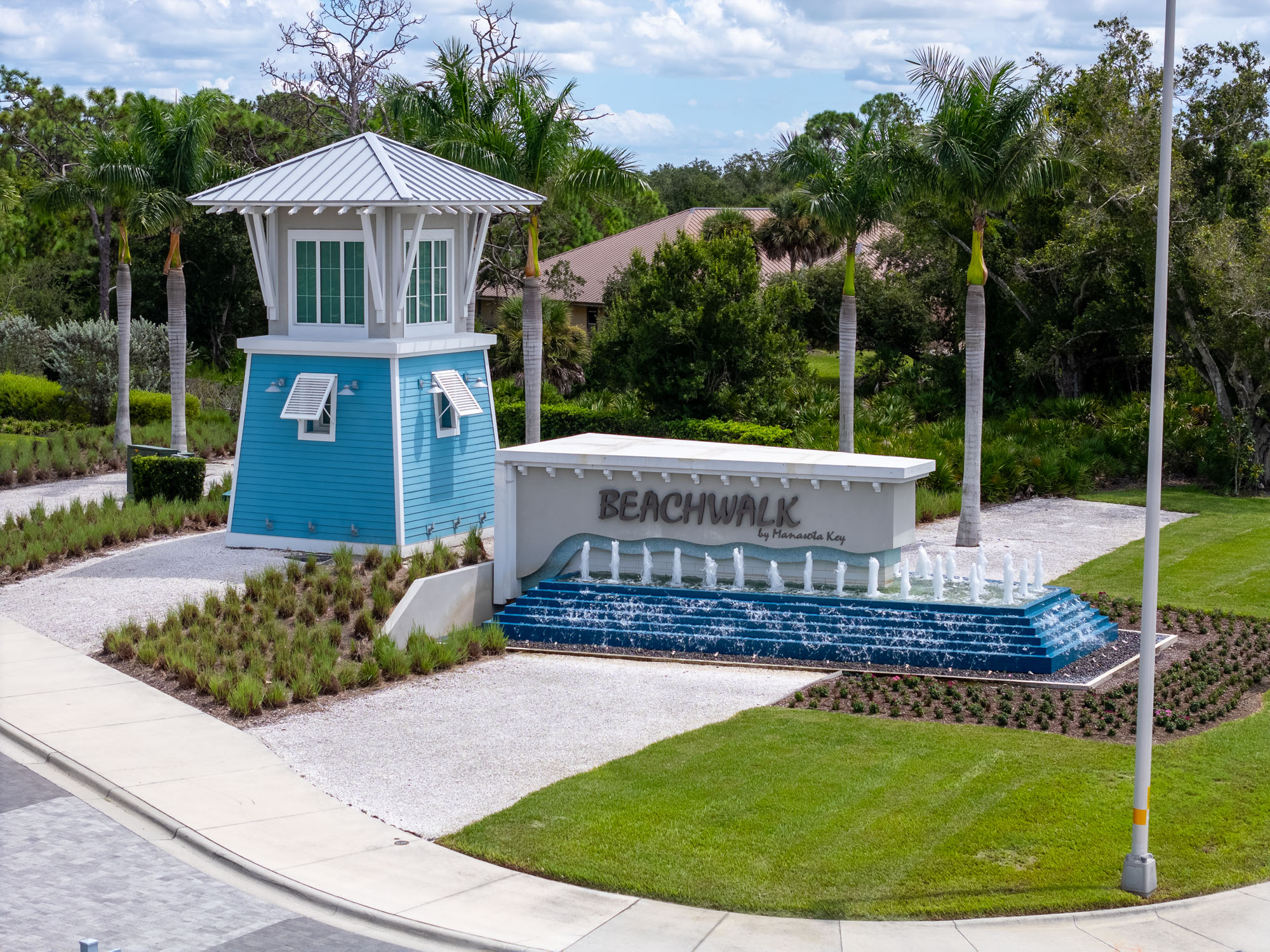
It is also one of the reasons newer construction draws so many relocation buyers on this coast. A home built to current code in a community like Beachwalk by Manasota Key starts out compliant, which takes this entire question off your plate. That is a different set of trade-offs, not a better answer for everyone, but it is worth weighing while you decide where to look.
Frequently asked questions
Does the FEMA 50% rule apply to every home in Venice and Englewood?
No. It applies to structures in a Special Flood Hazard Area, typically Zone AE or VE on the FEMA maps. If the house is outside the mapped flood hazard area, or it already sits at or above the required flood elevation, the rule is not a practical constraint on your renovation plans. Confirm the zone against the county's maps rather than relying on the listing.
Can I split a renovation into smaller phases to stay under 50%?
Sometimes, and sometimes not. It depends entirely on whether your jurisdiction tracks improvement costs cumulatively over a period of years or evaluates each permit separately. Communities are allowed to be stricter than the federal minimum, so ask the building official for that specific address before you build a phasing plan around it.
Who decides the market value of the structure?
The local building or floodplain official makes that determination, and it covers the building only, not the land. They may work from the property appraiser's improvement value, an independent appraisal of the structure, or a replacement-cost calculation, depending on the jurisdiction's procedure. Since that number sets your ceiling, it is worth asking how they arrive at it before you commit to a purchase.
Do routine repairs count toward the 50% threshold?
Ordinary maintenance generally does not, but the line is drawn by the permit and by local rules, not by how a homeowner describes the work. Permitted improvement, reconstruction, and addition costs count, including materials, built-in appliances, and contractor overhead and profit. When a project is anywhere near the threshold, confirm it with the building department in writing.
Should this stop me from buying an older home in a flood zone?
Not on its own. It should change the order of your due diligence. Verify the zone, get the elevation certificate, check for any substantial damage determination, and price your real renovation plan against your real ceiling, all inside the inspection period. Buyers who do that either proceed with confidence or negotiate from a stronger position.
Let's find out what you're actually buying
Flood zones, elevation, permit history, and the 50% rule are not the fun part of house hunting. They are the part that decides whether the house you love is the house you can actually change. I have walked buyers through this on both sides of the Sarasota and Charlotte County line, and the answers are almost always findable if you start asking early enough.
If you are looking at an older home in Venice, Englewood, South Venice, Nokomis, or on Manasota Key and you want to know what you are getting into before your inspection period runs out, get in touch through the contact form at luxuryhomesbycarol.com. Tell me the address and what you are hoping to do with the place, and we will go find out together.
Have a great day!
Carol Burdelik
Luxury Realtor • ADTV Host • Coastal Lifestyle Expert
LPT Realty, LLC • Florida License SL3549489
Serving Venice, Englewood, Wellen Park, Beachwalk by Manasota Key, and the Sarasota and Charlotte County coast
Carol Burdelik is a licensed Florida real estate Sales Associate, not a CPA, attorney, insurance agent, or building official. Nothing in this post is tax, legal, insurance, or engineering advice. Floodplain rules vary by jurisdiction and change over time, so confirm any specific property with the appropriate building department and your own professional advisors.
Communities
Featured Articles
Trending Articles from Southwest Florida’s Top Real Estate Team
Stay updated with our most popular real estate and luxury lifestyle articles.

Client Feedback
Read what previous homeowners have said about working with us.

Let's Connect
Get in Touch
We’re here to assist you with your real estate needs.
Say Hello
Reach out to us anytime.

Office
Luxury Homes by Carol
26040 Seastone Dr.
Englewood, FL 34223

Pushing You Forward
Our Team
Meet the dedicated professionals behind your real estate journey.


@CarolBurdelik on YouTube
Latest Youtube Videos
Get the latest videos by Carol Burdelik on her YouTube channel.
Get Started
Start Your Luxury Property Journey Today
Contact Carol for a personalized consultation and discover your dream waterfront property in Florida.