



Who Pays for Title Insurance When You Buy in Venice or Englewood, FL?

Luxury Homes By Carol Blog
Who pays for title insurance when you buy a home in Venice or Englewood, Florida? In Sarasota and Charlotte counties, the owner's title insurance policy is negotiable, so it is settled in your purchase contract rather than by a statewide rule. Buyers here often end up paying it.
If you are relocating to Southwest Florida from somewhere else, you may have already looked up "who pays title insurance in Florida" and found three different answers. That is because all three are right, just in different places. South Florida leans one way. Central and North Florida lean the other. And our stretch of the Gulf Coast sits in the group where nobody customarily pays it, which means the contract decides.
That matters more than it sounds. The owner's title policy is one of the larger single line items on a residential closing, and in a $685,000 purchase it is not a rounding error. If you assume the seller is covering it because that is how it worked in Ohio or New Jersey, you can find yourself a few thousand dollars short of the number you budgeted.
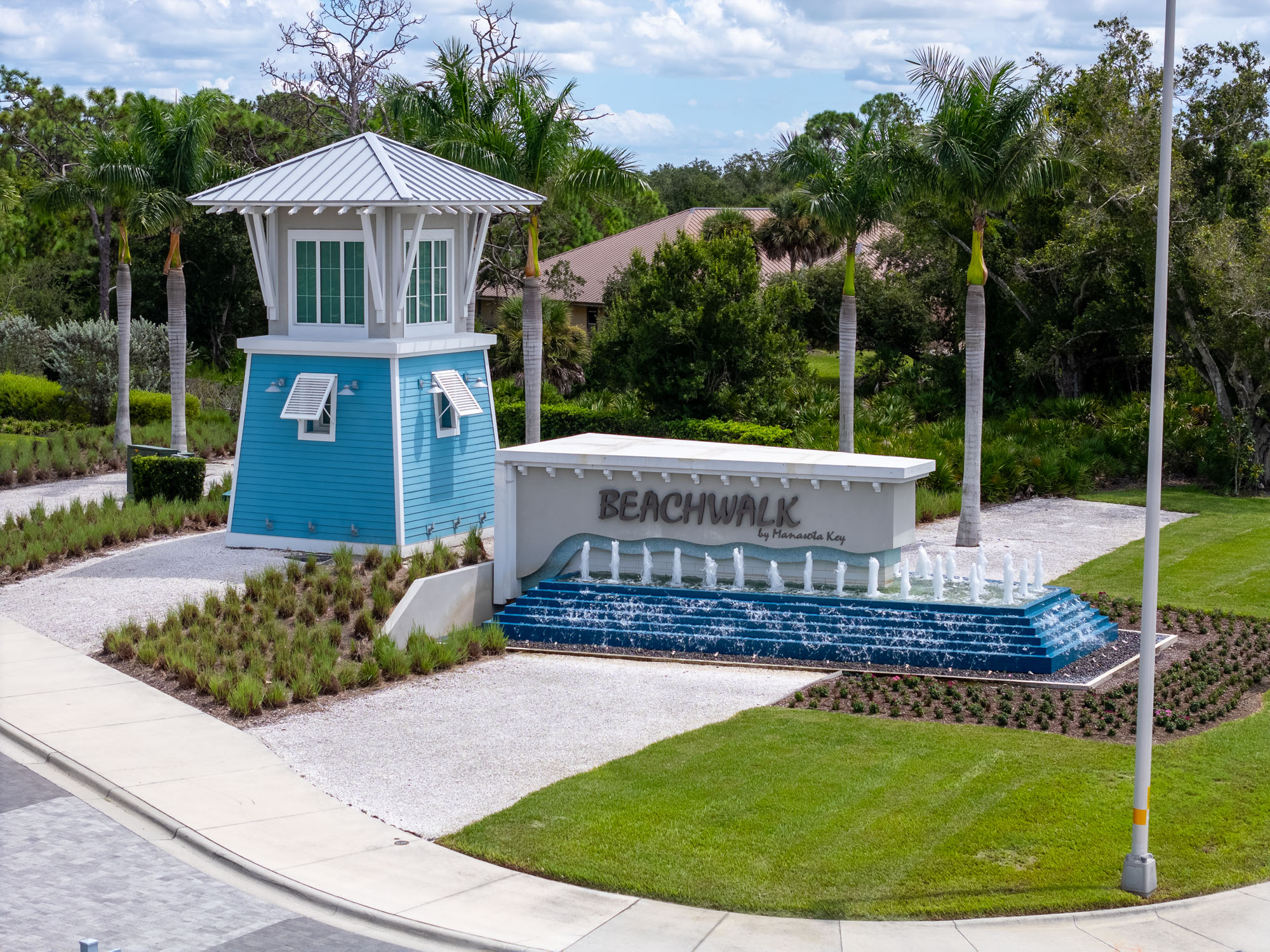
Here is how the buyer's side of a closing actually works in Venice, Englewood, Wellen Park and Beachwalk by Manasota Key, what lands on your side of the settlement statement, and the questions to ask before you sign anything.
The short answer: in our counties, this one is up for negotiation
Florida has no statewide law assigning the owner's title insurance policy to the buyer or the seller. It is pure local custom, and custom changes by county.
In the Miami-Dade, Broward and Palm Beach area, sellers customarily pay for the owner's policy. Around Jacksonville, Orlando and Tampa, buyers customarily pay. In Sarasota, Charlotte, Lee and Collier counties, there is no firm custom, so either party may pay, and the answer comes down to what your contract says.
So when a buyer asks me who pays, the honest answer is: whoever you negotiate it to. That is good news. A negotiable cost is a cost you have some control over, as long as you know it is there before you write the offer instead of after.
Why you will still hear "the buyer pays" a lot around here
Practically speaking, buyers in Sarasota County do frequently pay for the owner's policy, and a lot of local guidance is written that way. Two things drive it. First, whoever pays generally gets to choose the closing agent, and buyers often want that control. Second, in a market with strong out-of-state demand, sellers have had room to push the cost across the table.
None of that makes it automatic. I have written offers both ways in the same month. The point is to treat it as a term, not a fact.
Englewood 34223 sits on a county line, and that changes the conversation
This is the part that surprises people. Englewood is not in one county. The 34223 ZIP code straddles the Sarasota and Charlotte county line, so two houses a few streets apart can fall under different county recording offices, different tax bills, and different closing habits.
Practically, that means when you compare two Englewood homes, you are sometimes comparing two slightly different transactions. The recording office is different. The millage rate on your future tax bill is different. The local title and closing practices can lean differently. It is one of the quirks of buying in this pocket of the Gulf Coast, and it is worth knowing before you fall in love with a house.
If you are still deciding which community fits you, my areas served page walks through the towns and neighborhoods I cover across Sarasota and Charlotte counties, including which side of the line they sit on.
Two title policies, and people mix them up constantly
When someone says "title insurance," they could mean either of two policies. They do different jobs and they are paid for differently.
The owner's policy
This one protects you, the buyer, and your ownership of the property. It covers title problems that existed before you bought: a missing heir, an old unreleased mortgage, a lien nobody caught, a boundary or easement issue recorded years ago. It is a one-time premium paid at closing, and the policy stays in place for as long as you own the home.
This is the policy that is negotiable in our counties. It is also the one worth having. Florida property records go back a long way, and in a state with as much subdivision activity, inherited property and hurricane-era rebuilding as ours, a clean search is not the same thing as a guarantee.
The lender's policy
If you are financing, your lender will require its own policy protecting the loan amount, not your equity. The buyer pays for the lender's policy. That is not really negotiable, because it is a condition of the loan.
When both policies are issued together, the second one is typically issued at a reduced simultaneous rate rather than full price. Florida also sets title insurance premium rates by rule, so the premium itself does not swing much from one closing agent to another. What does vary is the closing fee, the search fee, and the other service charges layered on top. Ask for the full quote, not just the premium, and get it in writing from the closing agent before you are at the table.
I do not recommend a single title company. I give my buyers options and let them choose, and I would say the same to anyone: ask more than one, compare the whole fee sheet, and ask who is actually conducting your closing.
What else typically lands on the buyer's side in a Florida closing
The owner's policy gets all the attention, but it is one line among many. Here is what you should expect to see on your side of the settlement statement in Venice or Englewood. Some of these are taxes set by statute, some are third-party services, and some are just your own money moving into escrow.
- Documentary stamp tax on the note. If you are taking a mortgage, Florida charges doc stamps on the promissory note at 35 cents per $100 of the loan amount. The Florida Department of Revenue publishes the current rates and the exemptions.
- Nonrecurring intangible tax on the mortgage. A separate tax, calculated at 20 cents per $100 of the mortgage amount. Cash buyers skip both of these entirely.
- Lender's title policy and closing agent fees. Search, examination, closing or settlement fee, wire and courier charges.
- Recording fees. Paid to the Clerk of the Circuit Court in whichever county the property sits in, which is why the Englewood county line matters.
- Appraisal and loan costs. Origination, credit, flood determination, and anything else your lender charges.
- Survey. Often the buyer's cost. Worth getting even when it is not required, especially on waterfront, older lots, or anywhere a fence or dock may not sit where you think it does.
- Inspections. General home inspection, plus four-point and wind mitigation inspections if your insurance carrier wants them, and a WDO (termite) inspection.
- Prepaid insurance and escrow reserves. Your first year of homeowners insurance, flood insurance if applicable, and the reserve deposits your lender collects.
- Prorated property taxes. Split between you and the seller based on the closing date.
- HOA or CDD items. Transfer fees, capital contributions, and prorated dues, depending on the community.
An illustration, so the numbers feel real
Say you are buying a $700,000 home in Wellen Park with a $500,000 mortgage. For illustration only, using the statutory rates above: doc stamps on the note would run $1,750, and the intangible tax would run $1,000. That is $2,750 in state taxes on the financing alone, before a single title or lender fee is added. Your own closing will differ, and your closing agent and lender will give you the real figures. But it shows why "closing costs" is never just one number.
If you are working through financing options and want to understand how the loan side stacks up against a cash offer, my financing page covers how I walk buyers through that comparison.
What typically lands on the seller's side
For context, so you know what you are negotiating against:
- Documentary stamp tax on the deed, at 70 cents per $100 of the sale price in every Florida county except Miami-Dade, which has its own rate.
- Real estate commissions as agreed in the listing agreement and any cooperating compensation.
- Their share of prorated property taxes through the closing date.
- Payoff of existing mortgages and liens, plus the recording of the satisfactions.
- HOA or condo association estoppel fees and any association dues owed through closing.
- Owner's title policy, if that is how you negotiated it.
This gets decided in the contract, not at the closing table
Every buyer I have seen get surprised by a closing cost had the same thing happen: the cost was assigned in the contract weeks earlier, and nobody walked them through that page.
In Florida, most residential deals run on the Florida Realtors and Florida Bar contract forms, commonly called FAR/BAR. Those forms have a specific section for closing costs and a specific spot where the owner's title policy, the title evidence, and the choice of closing agent get assigned. Florida Realtors keeps a plain-language overview of how these contract forms and state requirements work.
So the moment to deal with this is when you write the offer. Not when the settlement statement arrives.
If you are paying cash
Roughly speaking, cash buyers make up a large share of what I see in Beachwalk and Wellen Park, and cash changes the math in your favor twice. You skip the doc stamps on the note and the intangible tax, because there is no note and no mortgage. You also skip the lender's policy, the appraisal, and the lender's escrow reserves.
What you do not skip is the owner's policy, and this is exactly where a cash buyer has leverage. You are already offering the seller speed and certainty. Asking the seller to cover the owner's policy is a reasonable trade for that, and it is a cleaner ask than shaving the price.
If you are financing
Your lender will send you a Loan Estimate early, and a Closing Disclosure at least three business days before closing. Use them. The CFPB has a line-by-line Closing Disclosure explainer that shows you exactly what each section covers.
Those three days exist so you can compare the final numbers to the estimate and ask questions while there is still time to fix something. Read it the day it arrives, not the night before.
Five questions to ask before you sign the offer
Bring these to your agent while the offer is still a draft.
- Who is paying for the owner's title policy in this offer, and why did we structure it that way? There should be a reason, not a default.
- Who selects the closing agent? In our counties this often travels with whoever pays for the owner's policy. If you are paying, you should be choosing.
- Which county is this property actually in? Especially in Englewood 34223. It affects recording, your tax bill, and sometimes the closing practices.
- What is the full fee quote from the closing agent, not just the premium? Closing fee, search, examination, wire fees. All of it.
- Is a survey included, and do I want one anyway? On waterfront, older lots, and anything with a dock, seawall or fence, the answer is usually yes.
How I handle this with my buyers
Before we write an offer, I build out the buyer's side of the closing so you can see the full number, not just the price. Taxes, insurance, HOA or CDD, title, inspections, the whole picture.
Then we decide together whether asking the seller to cover the owner's policy is the right use of your negotiating room on that specific house, or whether your leverage is better spent on price, on the closing date, or on a repair credit. On a home with two other offers, it may not be the move. On a listing that has been sitting through a slow stretch, it often is.
That is the part a lot of buyers relocating here do not have: someone who knows which asks land in this market and which ones cost you the house. My buying page walks through how that process runs from first call to closing.
Frequently asked questions
Is title insurance required when buying a home in Florida?
The lender's policy is required if you are financing, because the lender requires it as a condition of the loan. The owner's policy is not legally required, and cash buyers can technically decline it. I would not. It is a one-time cost that protects your ownership for as long as you hold the property, and Florida title histories are complicated enough to make that worth it.
Who chooses the title company in Sarasota and Charlotte counties?
Usually whoever is paying for the owner's title policy, though it is a contract term like everything else. If you are paying for the policy, push to select the closing agent too, and get a full written fee quote before you commit. Ask for more than one option and compare them.
How much are closing costs for a buyer in Venice or Englewood?
It depends on whether you are financing, because the doc stamps on the note, the intangible tax, the lender's policy, the appraisal and the escrow reserves all disappear on a cash deal. A financed purchase carries meaningfully more. Your lender's Loan Estimate and your closing agent's quote are the only two documents that will give you a real number for your specific purchase.
Do I pay the doc stamps on the deed as the buyer?
Normally no. Documentary stamp tax on the deed is customarily the seller's cost in Florida, and it is calculated on the sale price. What buyers pay is the doc stamp tax on the note and the intangible tax on the mortgage, and only when there is a mortgage. The Florida Department of Revenue publishes the current rates for all of these.
Can I negotiate who pays title insurance in a competitive situation?
You can always ask. Whether you should is a strategy call. In a multiple-offer situation on a well-priced home in Beachwalk or Wellen Park, that ask can weaken an otherwise strong offer. On a listing that has been on the market a while, it is often one of the easier concessions to get, because it does not require the seller to drop the price.
Let's get your numbers on paper
If you are buying in Venice, Englewood, Wellen Park, Beachwalk by Manasota Key, or anywhere across Sarasota and Charlotte counties, do not guess at your closing costs. Let's build the real number before you write an offer, so the settlement statement holds no surprises.
Reach out through the contact form at luxuryhomesbycarol.com/contact and tell me what you are looking at. I will walk you through the buyer's side of a closing here, line by line, and we will figure out where your negotiating room is best spent.
Have a great day!
Carol Burdelik
Luxury Realtor • ADTV Host • Coastal Lifestyle Expert
LPT Realty, LLC • Florida License SL3549489
Serving Venice, Englewood, Wellen Park, Beachwalk by Manasota Key, Nokomis, Osprey, Manasota Key, Sarasota and the surrounding Gulf Coast
Carol Burdelik is a licensed Florida real estate Sales Associate, not a CPA, attorney, insurance agent, or title officer. Nothing in this post is tax, legal, or insurance advice, and no rate, premium, or cost figure here is a quote. Statutory tax rates are cited from the Florida Department of Revenue and can change. Confirm your own numbers with your closing agent, your lender, your insurance agent, and the appropriate county office before you rely on them.
Communities
Featured Articles
Trending Articles from Southwest Florida’s Top Real Estate Team
Stay updated with our most popular real estate and luxury lifestyle articles.

Client Feedback
Read what previous homeowners have said about working with us.

Let's Connect
Get in Touch
We’re here to assist you with your real estate needs.
Say Hello
Reach out to us anytime.

Office
Luxury Homes by Carol
26040 Seastone Dr.
Englewood, FL 34223

Pushing You Forward
Our Team
Meet the dedicated professionals behind your real estate journey.

@CarolBurdelik on YouTube
Latest Youtube Videos
Get the latest videos by Carol Burdelik on her YouTube channel.
Get Started
Start Your Luxury Property Journey Today
Contact Carol for a personalized consultation and discover your dream waterfront property in Florida.